
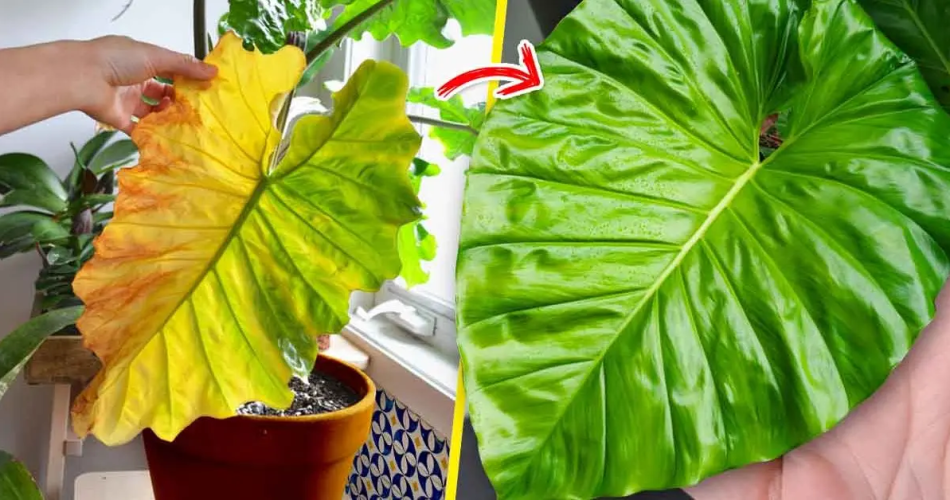
One of the problems many houseplants suffer from is chlorosis, or leaf discoloration due to a lack of chlorophyll. This discoloration gives them a yellowish appearance, which isn’t the ideal color for houseplants. Whether you have a green thumb or not, here are four homemade tips to prevent your plants from turning yellow and, consequently, burning.
Why do plants turn yellow?
Houseplants can decorate our home and add an exotic touch. While some plants are easy to care for, others require special attention. Their leaves can turn yellow if not cared for properly.
Yellowing leaves mean that potted plants are experiencing an abnormal watering level. When plants are underwatered, they turn brown, wilt, and dry out. But when they receive too much water, the roots rot and the plant can no longer feed. As a result, the edges of the leaves may turn yellow or even brown spots may appear. Another factor linked to yellowing is nitrogen deficiency. Nitrogen plays an essential role in the process of photosynthesis.
Also read: How to use coffee grounds as a natural repellent to scare away cats?
How to prevent plants from yellowing?
Here are some grandmother’s tips for taking care of your houseplants and preventing them from turning yellow.
- Let the water used to water the plant stand for 48 hours
Place your water in a large container and let it sit for about 48 hours to allow the calcium crystals to precipitate. This will create a chemical equilibrium between the calcium crystals and the dissolved ions, which form suspended crystals.
Spray the mixture on your plants and you will see that they will keep their shine longer than expected thanks to this remedy that avoids the use of chemicals.
Water
- Use vinegar or lemon to water plants and acidify the water
A pH that’s too low or too high can damage plants, so it’s important to get it right. For plants that need acidic soil, a simple teaspoon of vinegar or lemon juice per liter of water will suffice. Mix the liquids well and let them sit for a few hours before watering the soil . You’ll notice the difference. Plants will be less likely to yellow, and their leaf texture will be even better. - The return of coffee grounds as fertilizer for the plant
Beyond its many uses for the body and home, coffee grounds contribute to the maintenance of houseplants. Their relative acidity and nutrient richness make them a necessary tool for acidifying soil. However, using too many coffee grounds can cause weeds to appear. Place a light dose of coffee grounds in the soil and observe the results over the days. This will prevent the leaves from yellowing or burning.
plant coffee grounds
- A remedy to treat iron deficiency from plants
Some plants may suffer from iron chlorosis, which is an iron deficiency characterized by yellowing of the leaves. Excess calcium, phosphorus, or overly wet soil can also be factors that block iron uptake.
Also read: Lucky are those who have this plant at home: they are very lucky without even knowing it
Organic products to treat this deficiency are available in specialty stores. However, it is possible to overcome the blockage of iron absorption through a simple measure that consists of draining the soil and covering it with plant mulch, i.e., pine needles or citrus peel.
In conclusion, indoor plants require special care to maintain their vitality and therefore their color. It’s important to care for your plants as naturally as possible with these home remedies.
Also read: Digging your nails into a lemon: My gardener’s favorite trick for preserving plants