
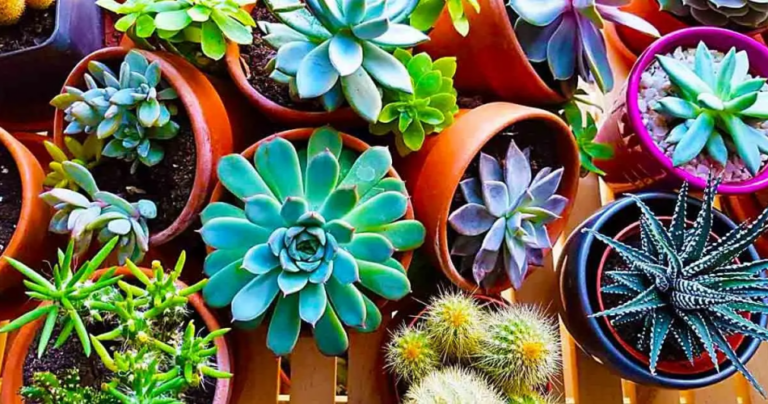
on 7 types of succulents and secret tips for growing them at home
Succulents are particularly popular houseplants because they require little maintenance. And for good reason: you don’t need a green thumb to care for these plants, which thrive in desert climates. Discover their types and how to grow them at home or in your garden.
These green plants are particularly popular because you don’t necessarily need to be a gardening expert to grow them. Succulents can survive drought thanks to the water stored in their leaves, stems, and roots. There are several types of these potted plants, and they are easy to grow.
There are many types of succulents
These succulents come in a variety of shapes and sizes, each characterized by the same care requirements. These fleshy foliage plants are easy to grow because they store water in their roots, much like cacti, a species of which there are over a thousand varieties.
Read also : How to keep bees away from geraniums? Tips and tricks
succulent
1-Echeveria elegans
Succulent plants1
These tropical succulents are characterized by their flower-like shape. This aesthetically pleasing plant shape should be grown in full sun. Without this light and warmth , the leaves can become more elongated and lose their luster.
2- Crassula ovata golum
Succulent plants2
This succulent variety is distinguished by its compact leaves that add volume to vases. The advantage of growing this type of succulent is its ease of maintenance due to its resistance to external aggressions , including diseases and pests, which you can keep away with 10 natural remedies.
3- Senecio Rowleyanus
Succulent plants3
These easy-to-grow plants have long stems filled with spherical leaves. This plant is decorative because when you plant it, you see a white flower with a subtle cinnamon scent.
4- Sedum carnicolor
Succulent plants4
This low-maintenance plant is made even easier to grow because it can withstand extremely hot or cold temperatures . Be sure to water it sparingly to prevent rot.
5- Haworthia fasciata
Succulent plants5
Native to Africa, this succulent has a very characteristic appearance with thick, fleshy and hard green leaves . Although it loves a lot of sun, it also tolerates low temperatures in winter, being a very rustic type for beginner gardeners.
6- Sedum morganianum
Succulent plants6
This water-rich plant, native to Mexico, has stems that can grow up to one meter tall. Its foliage has an unusual color, with a grayish-green tint. This plant, which can be planted in a pot, can flower and produce small red buds.
Read also: Lucky are those who have this plant at home: they are very lucky without even knowing it
7- Graptopetalum paraguayense
Succulent plants7
This plant is particularly aesthetically pleasing because it resembles a flower. Like Sedum morganianum, its foliage is longer. Graptopetalum paragueyense is distinguished by a slightly purple hue against a dark green background. The compact leaves indicate optimal growth for this plant.
How are these types of succulents grown?
These seven types of succulents require the same care conditions. It is recommended to let them grow on a patio because they need sunlight to bloom. To begin, you will need a pot with drainage holes. The first step is to mix moist sand and fertilized soil, which makes a good fertilizer for succulents. If your container is large, add clay pebbles for better watering before adding the substrate, which you can make yourself. You can also add a special fertilizer for succulents, which you can buy at a specialty store or nursery. To repot this plant in a larger container, turn the original pot upside down and tap the bottom until the plant loosens and the soil and roots are exposed. Plant the succulent in the new pot and tap the sides to accommodate the soil; it should cover the plant’s roots . To give your plant an aesthetic appearance, cover the surface of the soil with sand and white pebbles. This last step will help you avoid rapid evaporation of the water.
Read also: Toxic lookalikes: Don’t be fooled by hemlock