
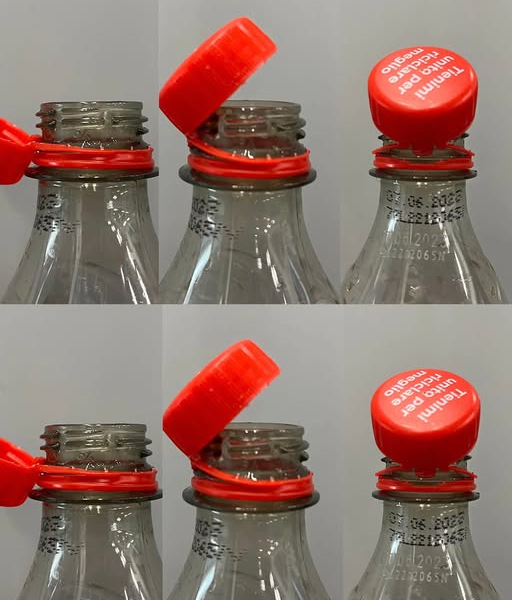
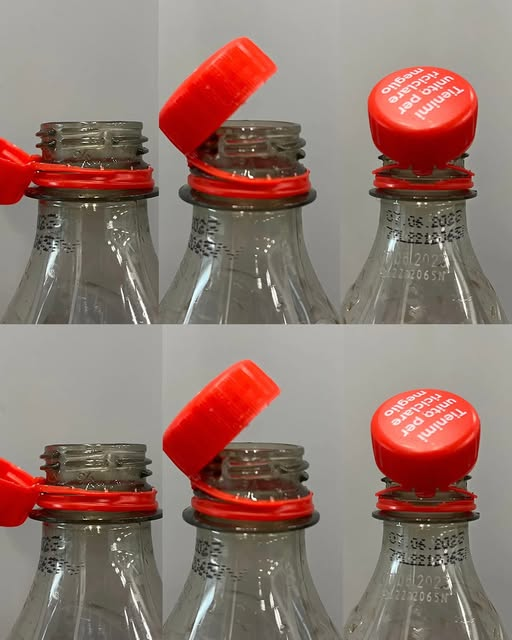
Leaving caps attached to plastic bottles is not only a good ecological practice, but it is also a legal obligation that contributes to the protection of the environment and the efficiency of recycling processes. A simple gesture that makes a big difference.
In recent years, the rules on recycling plastic materials have changed to promote more efficient waste management and reduce environmental impact. One of the most discussed rules concerns the caps of plastic bottles, which should not be removed before placing them in the recycling bins. But why is it important to leave them attached?
1. Better recycling of materials
Bottle caps are made of a different plastic than the body of the bottle, usually polyethylene (PE) or polypropylene (PP), while the bottle is made of PET. By leaving the cap screwed on, recycling plants can automatically separate the two materials during the manufacturing process, ensuring more efficient recycling.
2. Reduction of environmental pollution
Plastic caps, if detached, are easier to disperse into the environment because they are small and light. This increases the risk of them ending up in waterways and oceans, seriously harming marine life. Keeping them attached reduces the likelihood of them being dispersed into the environment.
3. Safety in waste management processes
Loose caps can pose a safety risk to waste collectors and the proper functioning of waste sorting machinery. By remaining attached to bottles, they reduce these risks and facilitate material management.
4. European regulations
From 2024, the European regulation on single-use plastics requires that caps remain attached to bottles until they are recycled. This measure is intended to reduce waste and increase the recycling rate of plastic materials.