
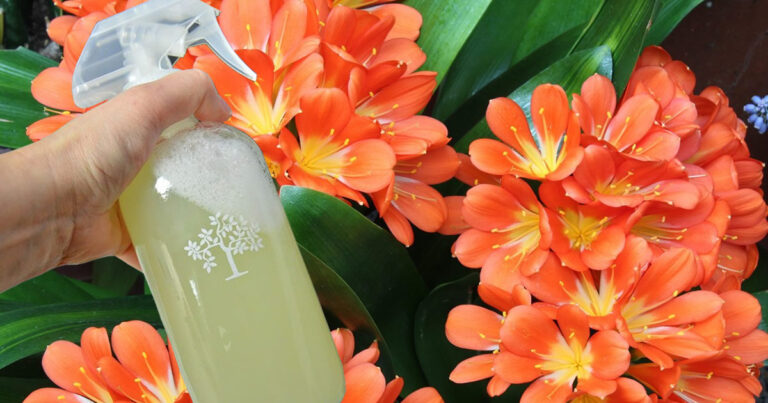
Native to South Africa, clivia is one of the most loved plants due to its elegant leaves and beautiful flowers. Clivia is reminiscent of elegant Victorian rooms and, until a few years ago, it was undoubtedly one of the most present floral plants in our homes.
Although it has lost some popularity in recent years, the clivia is still very popular and, if well cared for, it can give us an abundant flowering every year , composed of colorful petals that can give a touch of joy and style to our homes.
Below we list some tips for getting clivia to bloom profusely each spring and to ensure the plant is healthy and destined to last for years.
It is not easy to make the clivia bloom: it is a plant that requires a lot of care and it is important to make sure that the roots and leaves are absolutely healthy and that we do not have any problems. To make the clivia bloom every year, we must prevent the flower from turning into fruit .
Where to place the clivia?
Clivia needs constant light, but should not be exposed to direct sunlight. It can tolerate temperatures as low as -7°C, but this will cause the leaves to fall and return in spring. It is advisable to place the clivia indoors during the colder months, preferably near a window and away from radiators. The plant tolerates dry air, but it is recommended to water it daily with a little water.
Plant it in a small pot so that the roots remain tight. Clivia blooms best when the roots have little space to grow. The ideal soil for clivia is composed of 50% normal soil, 30% compost and 20% sand.
How and when to water clivia
During the winter, the plant needs little water: just water it once every 2-3 weeks. From spring to autumn, water once a week. Make sure the plant is well drained.
Use a liquid fertilizer containing micronutrients every 15 days in spring and summer.
Treatment and common diseases of clivia
Clivia thrives best if placed near north-facing windows. Below we list the most common diseases of clivia.
Brown and “burned” leaves . It is likely that the plant has been exposed to direct sunlight. Place the clivia in a bright corner but not exposed to direct sunlight.
Sticky spots on leaves . The problem could be caused by aphids. Spray with an environmentally friendly insecticide.
Wrinkled leaves . Lack of water or too dry environment. Water more frequently, but don’t overdo it.
Weak shoots . Too hot. Move the plant to a cooler spot.
The plant does not grow . Excessively cold environment.
Pale leaves and few flowers . Clivia needs fertilizer.
Rotten stem . Excess water and humidity. Do not water the clivia for 3 weeks.