
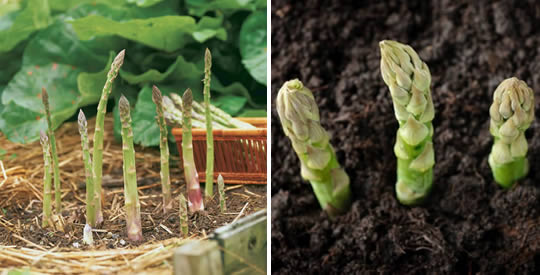
In addition to being delicious and suitable for many recipes, asparagus contains very few calories and carbohydrates, is rich in vitamin B (which helps brain and nerve function), folic acid, beta-carotene, and vitamin C, among other nutrients and benefits. Growing asparagus at home isn’t as difficult as it seems: below, we’ll explain how.
Asparagus itself is a tender shoot of a plant that grows underground, where its main stem and roots are located. It comes in different colors, depending on the varying degrees of ripening: white is due to a lack of underground light, while green indicates that the plant has grown and is full of chlorophyll.
To grow asparagus, you need sandy, well-drained soil with partial or full sun exposure.
They can be planted either from seeds or from seedlings (available from a nursery). If you choose to plant them from seeds, it is best to plant them in spring, about 25 cm apart. Cover the seeds with potting soil and water.
However, the slowest method is to grow from seeds. To speed up the growth process, use seedlings.
Transplant them in spring, to a depth of about 20 cm, and as they grow, remove all weeds. Water normally, but don’t overwater to prevent the roots from rotting.