
Can you propagate roses from a single potato? This method will allow you to flower endlessly.
Roses are among the most elegant flowers in the world today, with their fragrance and multitude of colors. Many people wonder if it’s possible to propagate roses from a single potato: experts teach an innovative and entertaining method that can be tried every day until the roses finally multiply.
How to propagate roses from a single potato?
Experienced nurserymen teach easy-to-implement methods, even for those without the classic green thumb. The first step to growing beautiful roses indefinitely is to cut cuttings about 20 cm long.
re-produce the pink
It is important that the plant is mature and has already flowered at least once. Cutting should be done with pruning shears, making a clean, angled cut. Before using the tools, they must be disinfected and sterilized with denatured alcohol. The cuttings should be placed in a glass of water until the potatoes are ready to receive them.
How to Grow Roses with Potatoes
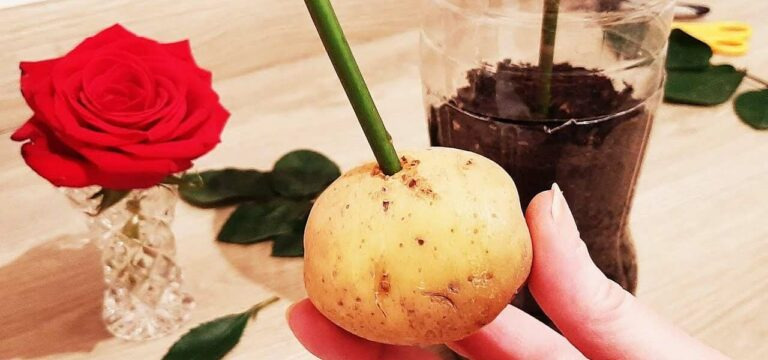
There’s no difference in the potato variety you choose, but it’s best to opt for fresh potatoes that don’t have dark spots. The hole should be made in the center of the potato, about 2 cm deep (use a pencil to help you).
Take the cutting and dip it into the potato, using the cinnamon to help it propagate. Now it’s time to take large pots and fill them with universal potting soil. Plant the potatoes in the middle of this soil, leaving the cutting above the ground. It’s important to facilitate the plant’s growth, possibly with a plastic bag to counter the heat and humidity.
If you choose this method, you must remove it once a day to allow the plant to breathe.
pink potato
The work isn’t over yet; it’s even time to observe the seedling’s growth. Generally, after about two weeks, you can observe the roots and their development, thanks to the potato, which is an important source of nutrition.
To promote healthy growth, always avoid direct sunlight and prefer a temperature above 20°C.
The soil should always be moist, there should be no water standing still, and the saucers should be emptied frequently (every day). The seedling should now be growing and is ready to be transplanted into the garden or a pot suitable for its size.
It’s important to note that not all varieties of roses can be used for propagation. Some varieties don’t develop strong roots and produce new plants. For this reason, always seek advice from your nurseryman.