
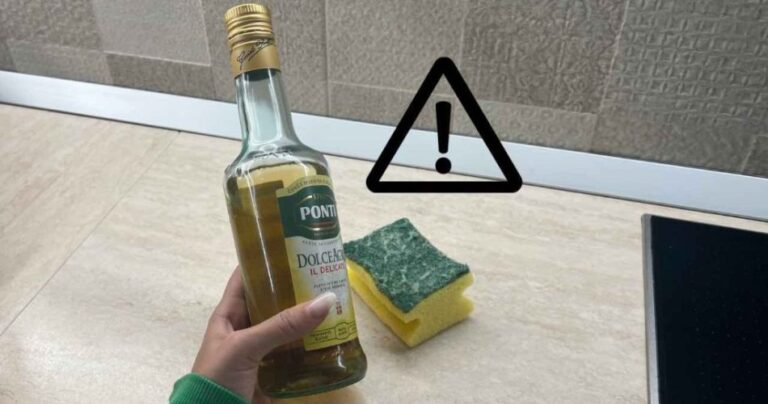
There are cases in which vinegar should not be used for cleaning: there is a risk of permanently damaging certain surfaces.
Clean with vinegar
Cleaning the various surfaces of our home is certainly an activity that should be carried out with a certain frequency , in order to avoid the accumulation of dirt and dust. To thoroughly disinfect surfaces, we often resort to certain chemical solutions readily available in specialized stores. However, it may happen that despite all efforts, some stains fail to come off . What to do in these cases? The alternative is to favor other natural and organic solutions, which in addition to having much less impact on the environment also allow us to save a good amount of money.
Vinegar for cleaning, be careful when using it on these surfaces: the risk is high
Some items often found in our kitchen are very useful when we need to clean and disinfect. Just think of sodium bicarbonate , a product capable of degreasing and sanitizing in depth but also of giving the environment a much more pleasant scent.
Vinegar
The same goes for vinegar , which, in addition to being an excellent ally for cleaning surfaces, is also a very popular deodorant. It is certainly no coincidence that many people now use it to degrease dishes and restore a new look to the stove.
However, before using vinegar to clean a surface, you should be familiar with its characteristics. In some cases, in fact, the use of vinegar is strongly discouraged because it can cause serious damage and prevent proper cleaning.
Consider, for example, pearls, which are also characterized by calcium carbonate. This substance, when in contact with vinegar, causes a reaction that can seriously damage the pearl.
In short, using vinegar to disinfect a pearl necklace runs the risk of causing irreparable damage . The advice is therefore to leave it alone, especially if it is an antique pearl necklace with strong sentimental value.
Another case in which the use of vinegar is not recommended is an egg stain on the kitchen counter or floor. If the egg falls and breaks, there is absolutely no need to use vinegar to remove egg residue.
Vinegar, in fact, is a substance that tends to coagulate the egg: to be clearer, with vinegar the egg stain will become even more complicated to clean . It is better to use Marseille soap to clean the floor of egg residue.
Never use vinegar to clean marble, concrete, or wood.
Then there are several surfaces on which vinegar should never be used for cleaning. Consider marble, for example, but also granite and concrete : vinegar can cause opaque stains that are impossible to remove.
Do not use vinegar to clean parquet floors.
The same goes for wood and parquet floors, as using vinegar to clean these surfaces risks dulling everything.
Finally, when it comes to knives, the use of vinegar should be very moderate . If we notice that a little rust has appeared on our knives, we can try to remove it with vinegar, but be careful not to overdo it.
Indeed, frequent use of this element risks dulling the knife and damaging it permanently.
White vinegar should never be used, even in a washing machine or dishwasher.