
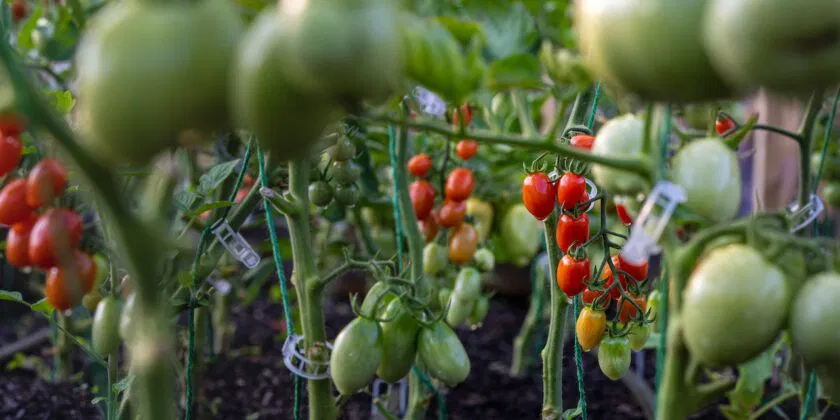
Growing tomatoes on your balcony is an increasingly popular choice. It requires a little effort and a few hours of time, but you’ll reap the rewards of bringing organic, zero-kilometer fruit to your table. Do you share this passion? Then you’ll surely want to learn more.
You don’t need a large area to create an urban garden . A terrace or balcony are enough spaces to allow your green thumb to fully express itself. Of course, you will have to choose your plants carefully. Not all of them fit into small spaces, but some do wonderfully. Like the cherry tomato , which grows very well even in a pot . With a little care, you will always have it available to prepare your dishes. You will leave everyone speechless.
Sowing
When to sow? In fact, you can start as early as February , but be careful to protect the plant from the cold, keeping the pot indoors for the first few days. Or you can wait for temperatures to rise and sow between March and April. Plant the seed in a pot at least 40 cm in diameter and 40 to 50 cm high. The roots of the plant grow deep and need space to grow well. Place the seed not too low but about half a cm deep and choose a warm, sunny spot . If your balcony is not well exposed, you can cover the plant with a plastic sheet to retain the heat.
Vegetable garden on the balcony, if you want a healthy plant, be careful with the vase!
When choosing a vase, consider not only the size but also the material. Avoid plastic pots , which don’t allow the roots to breathe and promote rot. They also don’t guarantee the right temperature for the plant, as they overheat in summer and don’t protect plants from frost in winter. Instead, choose earthenware pots , a natural, breathable material that ensures the right level of humidity and temperature for the plant. With these pots, there’s no risk of root rot. The only downside is the weight. A terracotta pot with damp soil becomes very heavy and difficult to move.
Growth
Vegetable garden on the balcony, if you want the tomato to grow luxuriantly, choose the same soil as that used in traditional vegetable gardens . Create a compound by mixing two parts of clay, one part of sand and one part of peat. Administer fertilizer, preferably organic and in liquid form, to be diluted in water. Water the plant constantly but do not overdo it. Choose the coolest hours of the day and pour the water directly on the soil and never on the leaves. The cherry tomato grows tall and needs a support to lean on. A bamboo cane will do the trick. Be careful not to tighten the plant too much to avoid pinching. Remember to remove the axillary jets , the leaves that are born at the points where the main branch and the lateral branches meet. This will serve to strengthen the fruiting branches. After about 60 days, the first cherry tomatoes will be ripe and will reproduce throughout the summer.