
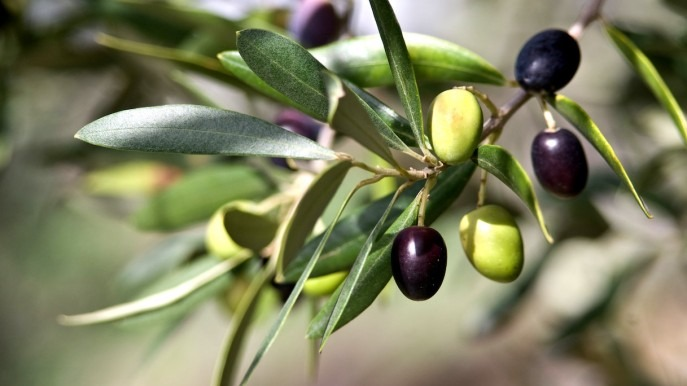
Pruning an olive tree is a very delicate but essential operation if you want to have a good harvest: here are all the techniques you absolutely need to know
A symbol of peace and rebirth, the olive tree is a plant that grows abundantly in our country , typical of the Mediterranean regions. From its fruit, the olives, we obtain one of the best and most versatile products in the world: extra virgin olive oil. We Italians are great producers, so much so that this precious green gold is undoubtedly one of the excellences of our territory. Do you also want to grow olive trees? Don’t worry: it’s easier than it seems. But you have to pay attention to pruning , which is perhaps the most delicate moment. Let’s see how to do it.
Hint
Olive tree, the characteristics of the plant
When to prune the olive tree
How to prune an olive tree
Farm size
Production size
Olive tree, the characteristics of the plant
The olive tree (scientifically called Olea europaea ) is a fruit tree belonging to the Oleaceae family – which includes shrubs and ornamental plants such as ash and jasmine. Its origins are uncertain: it is believed to have roots in Asia Minor, where the wild olive tree has grown spontaneously in lush forests since ancient times. The plant then found its diffusion in Greece and, subsequently, throughout the Mediterranean region , where it is now cultivated for food purposes (both for the consumption of olives and for the production of extra virgin olive oil).
It is a slow-growing evergreen tree, as its fruiting only begins 3/4 years after planting and reaches its peak after at least 9/10 years. It is also very long-lived, as in ideal climatic conditions it can live for over a thousand years. Its leaves are lanceolate, silvery white on the underside (where they have thick hairs) and intense dark green on the upper side. Towards the end of spring, the plant blooms : it is a riot of small white flowers, which offers a magnificent spectacle.
The fruit is a fleshy drupe called an olive: there are many varieties , all rich in interesting nutritional properties. In general, in fact, olives provide significant amounts of omega 3 and omega 6 fatty acids, useful for cardiovascular health, and antioxidants, which reduce the risk of developing many diseases. From the pressure of the fruit, extra virgin olive oil is obtained: used as a condiment, it is the basis of the famous Mediterranean diet and flavors any dish, providing valuable nutrients to the body.
When to prune the olive tree
In olive tree cultivation , pruning is one of the most important operations. Therefore, it is essential to know how and when to carry it out: every intervention must be aimed at the well-being of the plant, and must be carried out in the best way. Let’s first see when is the right time to carry out pruning. It must be said right away that there is no general rule that is good for every olive grove : times vary depending on the climate and the geographical region in which we are located. However, it is possible to identify in principle the best months to carry out the cuts.
A first intervention, called dry pruning , must be carried out between the end of winter and the beginning of spring (i.e. between the months of February and April). This is the main operation, which must be carried out when the plant is in vegetative rest, before a new flowering. In warmer regions, pruning can be brought forward to January or February, while in northern Italy it is better to wait until April or May: the olive tree is in fact a very resistant plant, but it fears the cold and its cuts could expose it to diseases, if carried out in unfavorable climatic conditions.
If necessary, you can then carry out a second pruning (called green pruning ) during the summer season: however, this intervention must be reduced to the necessary minimum. Its purpose is to eliminate all dead or seriously diseased branches, but also to remove suckers and suckers, which could damage the plant and its harvest. What must absolutely be avoided, however, is early pruning, that is, in November and December , as it could wake the tree up during its resting phase.
How to prune an olive tree
We have seen when to prune the olive tree, now all that remains is to discover the most useful techniques for making the cuts. First of all, it is important to remember that each “scar” exposes the plant to possible diseases: this is why it is important that you use clean and well-maintained tools, in excellent condition. You will also have to be careful never to damage the bark that protects the plant from pests and fungi. As for the type of cuts to be made , these differ depending on the age of the olive tree.
Farm size
In the first years after planting the plant, it is important to intervene with periodic cuts that give it the right shape. This type of operation is called trellis pruning , and is generally carried out until the third or fourth year of the olive tree’s life. How do you practice? First, immediately after planting your plant, cut the stem about 60/70 cm from the ground. This is where the main branches will emerge : select three or four of the most robust and vigorous, eliminating the weakest ones that would only steal valuable nutrients from the tree.
In the years following the first, your olive tree will gradually take on the shape you have chosen . At this time of its life, the plant develops a luxuriant crown that must be controlled, to prevent the branches from intertwining or coming out of the shape of the tree. During breeding pruning, cuts must therefore be reduced to a minimum. After having defined the basic structure of the olive tree, you will only have to eliminate the suckers and suckers , that is to say the vertical branches which rest on the trunk or on the branches.
Production size
Around the fourth year of life, the olive tree begins to bear fruit . It is at this stage that regular pruning begins, carried out at the end of winter (or in spring, depending on the geographical area). This is called production pruning : the cuts are no longer aimed at giving shape to the plant, but at making it as fruitful as possible. To do this, you will first need to ensure that the foliage continues to grow abundantly, while maintaining the right balance.
So go ahead and remove the branches that cross and those that remain perpetually in the shade: they are indeed not productive, but they still remove nutrients from the rest of the plant. In this way, you will allow sunlight and air to circulate well inside the foliage, invigorating the olive tree. It is also important to reduce overproduction, which could give rise to the phenomenon of alternation (i.e., a particularly rich year for olives, followed by a very poor season).