
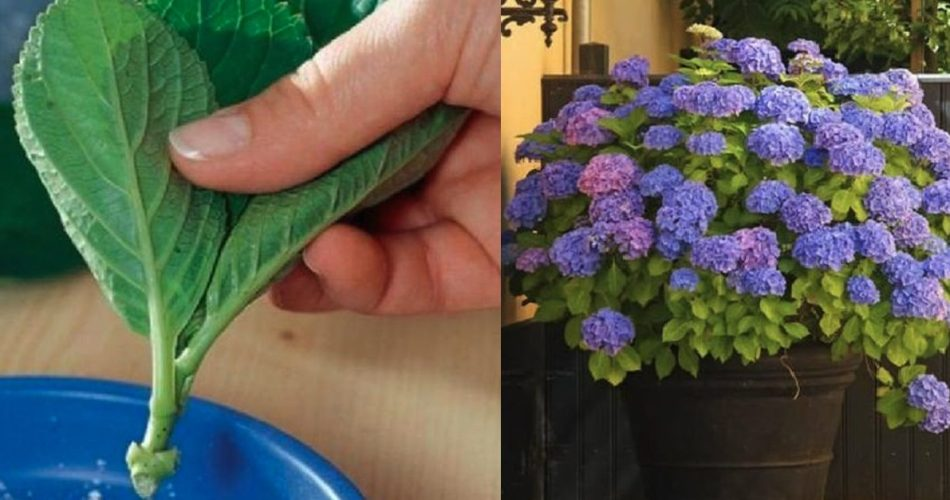
With its lilac to blue blooms, the hydrangea is a beautiful plant to grow even in a pot. You may not have known, but its colors can also depend on the acidity of the soil. It doesn’t like direct sunlight, preferring shade; it requires plenty of water, but not from the tap, and requires pruning at specific times of the year. Let’s see how to grow it in the best conditions and how to care for it.
Gaia Cortese • March 18, 2019
BACK
NATURE
PLANTS AND GARDENING
Hydrangea is a plant that can be grown in pots or in the garden , placing it in a shaded or semi-shaded area . In fact, you should know that hydrangea is one of the sciaphilous plants , that is, all those plants that do not like direct exposure to the sun. So, if you do not have a lawn or a balcony facing south or east, you can still have guaranteed flowering thanks to these plants (in addition to hydrangea, camellia, astrantia, bellflower, viburnum and most ferns) which are good even in the shade.
Growing and caring for hydrangeas
- Characteristics of hydrangea
- Soil and watering
- Temperature and exposure
- When to plant
- Fertilization
- Size
- Growing hydrangeas in pots
- Diseases and parasites
Characteristics of hydrangea
Hydrangea is a plant that belongs to the Hydrangea family , native to China , Japan and the American continent. You will almost certainly have seen at least once a brightly colored garden covered with these flowering plants.
With colors ranging from lilac to blue, in fact, hydrangeas are plants much appreciated for their flowering , with a meaning that can change depending on the shade of the flowers, while remaining closely linked to the feeling of love . Their colors can also change depending on the pH of the soil: if it is acidic the hydrangea will be blue , if it is alkaline the hydrangea will be pink . There are also white variants , as well as new hybrids , which you may or may not like, which are characterized by a two-tone flowering (red and white, or red and fuchsia). The hydrangea is one of the most cultivated plants in vegetable gardens and gardens, and is often found used to create low hedges or to create the edges of flowerbeds, lawns and green spaces .
As is often the case with other species, even in the case of hydrangeas you can find different varieties , some of which have particular characteristics: an example is the hydrangea paniculata , so called because of the typical inflorescence of the pannicle , or the climbing hydrangeas which, as in the case of the Petioralis variety , they are suitable for covering walls or other vertical spaces and are very appreciated for their long flowers .
Soil and watering
To grow hydrangeas, choose acid-loving soil . Remember that the soil must always be moist . Hydrangeas, even if they remain in the shade, require a lot of water, especially when they are flowering. However, always be careful of stagnant water and the possible presence of limestone, as your plant could risk dying. Otherwise, water it directly on the roots, even twice a day during the summer.
Temperature and exposure
As I explained to you from the beginning, you should avoid exposing your hydrangea directly to the sun: the plant prefers to be placed in semi-shade , with a cool and humid climate , thanks to abundant watering, and a temperature that should be around 18 degrees . Likewise, pay attention to very cold periods: during the winter , it is recommended to cover the soil by carrying out what is called mulching , so that the hydrangea can withstand even the harshest seasons.
When to plant
The best time to plant a hydrangea is in autumn , between October and November, and in spring , between March and April. If you want to plant a hydrangea from cuttings , the best time is in autumn, even better if this operation is done in October.
Fertilization
The fertilization period is concentrated in spring, between March and April, and in summer, between June and July, and the main goal of good fertilization is to promote the flowering of the plant . Since hydrangeas are plants that are particularly fond of potassium , you will need to obtain a fertilizer for acid-loving plants or a fertilizer rich in this mineral.
Size
It is enough to prune the hydrangea twice a year , starting in February , once the frost period has passed and before the spring flowering. To do this in the most correct way, you must remove the weakest branches, in order to slightly thin out the plant. Then cut the stems that produced flowers last season, to mid-length, taking care not to cut the new shoots. A second, less demanding pruning should then be carried out at the end of flowering, towards the end of September , cutting only the largest branches and using the leaves that have already fallen to cover the roots given the drop in temperatures.
hydrangea-growing-vase
A white hydrangea grown in a pot.
Growing Hydrangeas in Pots
If you want to grow a potted hydrangea , get one of modest dimensions (with a diameter of 50 to 60 cm) and always pay close attention to the amount of watering you water, because as mentioned above, the hydrangea requires a lot of water . , even if it is never exposed to direct sunlight. Then water it in the evening or early in the morning . If you can water it twice a day, distributing the amount of water, so much the better. Do not use tap water if you already know that it is hard, that is, very calcareous. To remedy this, you can add half a cup of vinegar and let the water stand for at least a day.
Diseases and parasites
Although it is a generally resistant plant, the hydrangea can also encounter certain problems, related to both external factors and improper care.
For example, when the plant is watered with water containing limestone , the leaves will tend to turn yellow : to solve the problem, you can start watering it simply with rainwater .
All fungal diseases , indicated by the presence of small yellow-greenish spots on the leaves , can in turn be caused by excessive amounts of water or a lack of it. Among the animals that can attack the plant, one must fear mealybugs and red spiders , which can turn the leaves yellow and cause them to fall .