
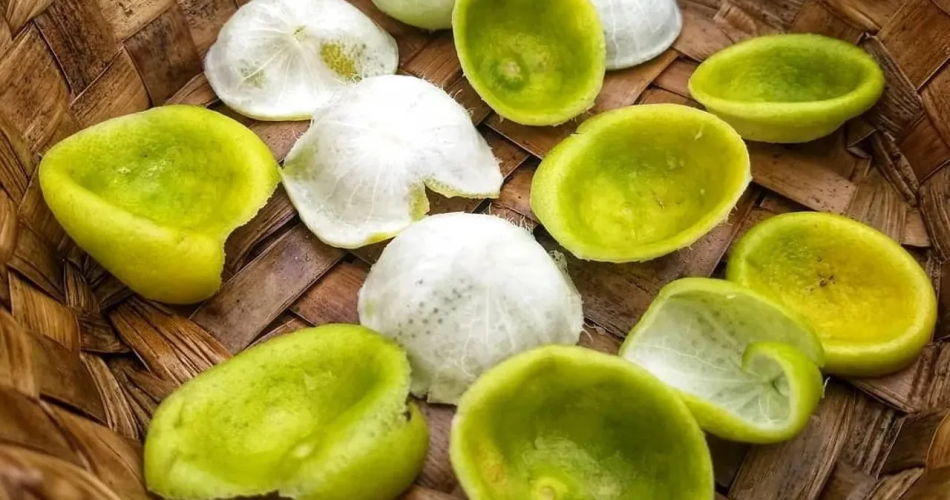
If you’re one of those people who throws lemon zest in the trash, you’ll love knowing that you can use it better and take advantage of its valuable nutrients to make your plants more beautiful and healthy. Here, we’ll explain how to use lemon zest to make your garden bloom this spring.
If you pride yourself on being a gardening expert , then you surely know that your kitchen waste turns out to be the best fertilizer for growing your plants, especially fruit and citrus peels, whose properties, combined with other plant residues, provide the soil with enough nutrients to stimulate growth.
Lemon peels contain a good amount of nitrogen, phosphorus, and potassium, which not only help nourish the soil but also deter pests due to their acidity and high pH level. It’s a 100% eco-friendly and effective form of composting to beautify your garden.
Because citrus peels rot relatively quickly, microorganisms attack them quickly . In this way, this natural process helps plants grow safely. It also acts as a herbicide , which helps eliminate pests and weeds that grow around the plants.
We explain some uses with which you can exploit the peels of your lemons and at the same time take care of your garden.
Lemon zest for your garden, your plants’ secret ally
As compost: Use the peels of your citrus fruits so that they decompose more quickly, enriching the quality of the soil and therefore your plants grow more easily and faster.
As a natural pesticide: To repel pests, simply place lemon zest near plants. Its smell and acidity will drive them away.
To keep dogs and cats away: The smell of citrus fruits is unpleasant for animals. A good practice to keep them away from the plants is to spread chopped citrus peel mixed with coffee grounds.
For acidic soils: Drying citrus peels and grinding them into a fine powder will help increase the acidity of the soil, as some plants need it, including azaleas, camellias, fuchsias, gardenias, hydrangeas, and some others.
Ant repellent: in this case, we can spread them around the plants, it is better to chop them more finely; this will prevent them from climbing the stems and devouring the tender shoots.
As a biodegradable seedling: Another interesting use is to use the shell as a kind of seedling or pot, except when dealing with plants that are very sensitive to acidity.
As irrigation water: Another way to use lemon peels is to turn them into irrigation water. To do this, boil a liter of water, then place the peels on the stove and let them sit for 15 minutes. Then wait for them to cool and dilute them with half a liter of cold water. Spray the leaves every three days.