
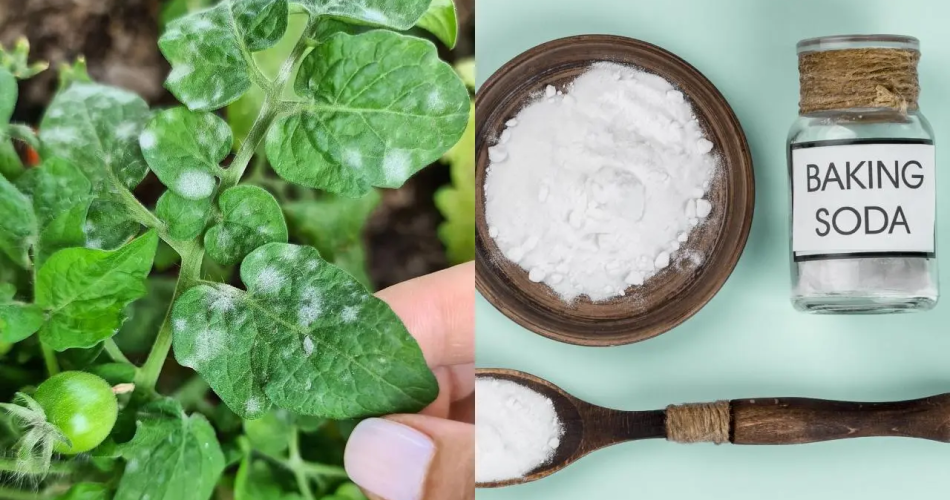
Having plants in our home is wonderful, whether they decorate the interior of the house, are in the yard or are part of your garden, they have many benefits, however, they require care, since many evils such as pests, diseases and fungi hide, but do not worry, because you do not need to resort to dangerous and unknown chemicals to combat them. Well, today we are going to give you a trick with baking soda to eliminate white fungus from your plants .
There are thousands of types of fungi and many of them affect our plants, weakening them and many pests are attracted to them and end up killing our green friends, so it is common to see not only fungi, but other pests such as mealybugs, aphids and other species in a single plant.
Baking soda helps control the proliferation of fungi in our plants, besides being a product that is respectful of your health and the environment, it helps control any type of fungus , no matter if it is white, black or other fungi, this ingredient works perfectly.
Baking soda tip to eliminate white fungus from your plants
You will need:
Bicarbonate
Skimmed milk
Cascade
Bottle with atomizer
Step by step:
You will prepare the portions you need depending on the size of the problem, but you must mix two parts water for every part milk, that is, if you use a cup of water, you should only use 1/2 milk.
Mix two parts water with one part skimmed milk in the spray bottle. The milk should not be whole so as not to attract insects.
For every liter of water, you will add 30 grams of baking soda, or about two or three tablespoons.
Once you have all the ingredients in the bottle, close it and shake well
Shaking before use and spraying plants will not only kill fungus, but also prevent it, so you can spray plants that don’t have fungus yet but are close to ones that do.
Apply this solution to the leaves of your plant, but not only on the top, but also on the bottom.
Application should be carried out at dawn or dusk, never during the sunniest hours to avoid sunburn on the plant.