
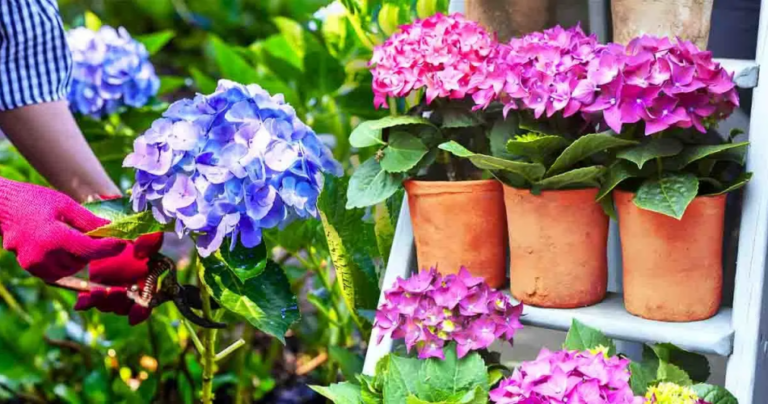
Here’s What Happens When a Hydrangea Grows in Your House
Hydrangea, also called hortensia, is an ornamental plant that can also be grown indoors. To make this beautiful plant bloom, discover the secrets of growing and flowering it outdoors. Did you know that this flower has a special meaning? One thing is certain: you’ll understand the message of those who offer it to you right away!
Meaning of Hydrangea in the Language of Flowers
hydrangea garden
Each flower symbolizes a specific message, and when deciding which one to give as a gift, it’s important to know which one is best suited to the occasion. In the language of flowers, the hydrangea represents the birth of a new love or the return of a past partner. It’s also worth noting that the meaning of the hydrangea also changes depending on the color you choose.
White, for example, represents the birth of sincere love. Giving a white hydrangea is a way of telling your partner that you’re thinking deeply about them. To convey a message of deep love, despite your loved one’s capricious nature, choose the color blue. If you want to express your loyalty and invite your partner to enjoy the joys of love, it’s a good idea to opt for a bouquet of pink hydrangeas.
Also read: 5 reasons to soak seeds before planting (and how to do it)
growing hydrangea
hydrangea1
Growing hydrangeas is simple because they don’t require any special care. Watering should be regular and abundant, especially in summer. If you want good growth and abundant flowering, it’s recommended to prune any dry branches between February and March. By following these steps, the hydrangea will become a fertile plant that blooms in spring.
To care for hydrangeas, it is important that the soil is composed of one quarter garden soil, one quarter sand, one quarter earth, and the remaining quarter wood. Remember that this plant prefers moderate sun exposure, so it is advisable to choose a location with moderate sunlight, protected by a wall, and possibly facing northwest.
The only precaution to protect the plant is to avoid low temperatures. Winter, in fact, can be fatal for hydrangeas, which can wither with the arrival of low temperatures. For this reason, it is advisable to protect it during the colder months with straw and fabric.
Hydrangea Flower Colors
potted hydrangea
As mentioned above, macrophylla hydrangeas can appear in different shades. The different colors depend on the composition of the soil. The pH of the soil and the amount of aluminum present in it are fundamental elements in defining its shades. Thus, shades of blue, light blue, and purple correspond to an acidic soil, while with a neutral pH, we tend to observe the growth of flowers with pink and red pigments.
For white hydrangeas, however, the situation is different, as their color is not related to soil pH and they simply maintain or change color depending on the light. With little light, they can become greener, while with a little sun, they can turn red or pink.
Fertilizing Hydrangeas
The best time to fertilize hydrangeas is in the fall. However, it’s worth keeping in mind that around February/March, you’ll need to use a slow-release fertilizer to ensure good flowering. It’s also worth considering the possible iron deficiency of these flowers and using iron chelates, which act as a preventative treatment that can turn the leaves green.
Pruning Hydrangeas
prune the hydrangea
Pruning hydrangeas is essential to ensure good flowering. It’s also important to keep in mind that hydrangeas always bloom on the previous year’s branch. For this reason, an improperly trimmed branch could compromise good flowering.
Also read: Put a ball of aluminum foil on your plants: you will eliminate 6 problems forever
Remember that these flowers should not be touched, so you will have to wait until they dry and only harvest them around February or March. When pruning, it is also advisable not to go below the buds and to start at the base of the flower.
Pruning the branches, however, depends on the age of the plant. If you have a very old hydrangea, the branches will need to be removed from the base to about a third of the height, so that the cut exposes the interior of the bush. To ensure proper pruning, it is recommended that the shears are sharp and clean to prevent possible infections.
Also read: Why sprinkle salt on your plants?