
on 4 “immortal” houseplants, perfect for those without green fingers
Houseplants are a great way to decorate your home, and sometimes even to purify the air. Even if you don’t have a green thumb, you can brighten up your home with decorative foliage plants, as long as you choose hardy, easy-care plants. Discover these easy-to-grow plants that don’t wilt easily.
Even if you don’t have a green thumb, don’t deprive yourself of the benefits of indoor plants. Some varieties are easy to care for and even hardy.
Which houseplants are hardy and easy to care for?
If you want to add some color and greenery to your home, here are some easy-to-maintain plants to grow at home.
Read also: 27 mosquito and fly repellent plants to have at home in 2023
Epiphyllum ackermannii, easy-care plant
epiphyllum
Epiphyllums are cacti belonging to the Cactaceae family. The Epiphyllum genus includes 20 different species that grow in warm, humid forests. Furthermore, these succulents are among the few cacti that thrive in a humid environment. Among the easy-care Epiphyllum varieties is Epiphyllum ackermannii. This evergreen perennial is characterized by flat, drooping stems with rounded, serrated edges. Also known as the orchid cactus, Epiphyllum ackermannii is a resilient and easy-to-grow plant. Since it is a succulent, the orchid cactus does not require daily watering. Frequent watering could even lead to rot. Also, avoid allowing water to pool on the sides of the stems, which could cause them to rot. Give your plant partial shade and keep it away from heat sources like radiators . As for the substrate, you can use cactus substrate, or use a mixture of leaf litter and sand. As soon as the first shoots appear, fertilize your houseplant every 15 days with a cactus fertilizer until the end of the flowering period.
Epiphyllum anguliger, an easy-care decorative plant
inclined
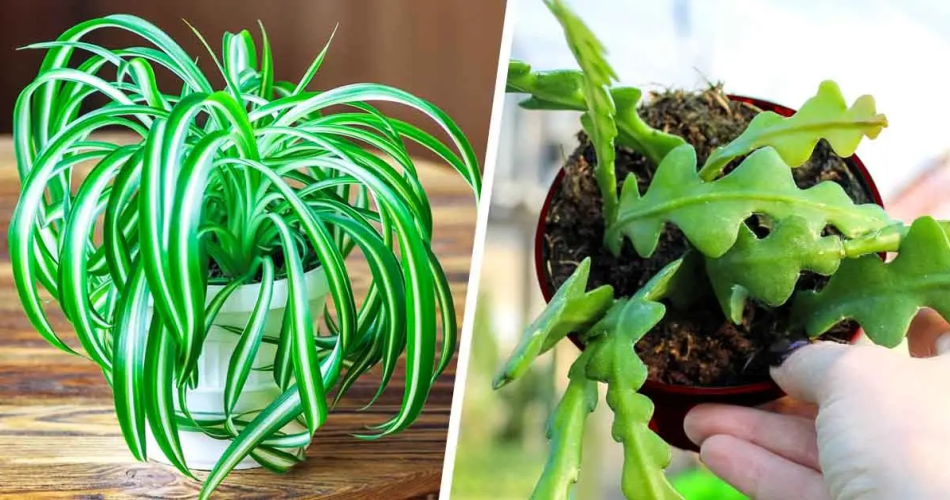
Also known as the zigzag cactus, Epiphyllum anguliger is another easy-care variety of the Epiphyllum genus. This plant gets its name from its succulent, serrated leaves. The edges of the leaves, cut into elongated teeth, give the plant a zigzag appearance. The zigzag cactus can be grown indoors or outdoors. Like all cacti, it only needs a little water. Instead, water it regularly in summer, but only when the soil becomes dry on the surface. Be careful not to leave standing water in the saucer or planter. Also, keep your plant in a bright spot, but away from direct sunlight. Choose a terracotta pot for your cactus to encourage its strong and vigorous growth, and use a well-draining substrate, composed of a mixture of soil, river sand, and compost. Fertilize your plant from March, every 15 days, with a tomato fertilizer.
Chlorophytum, a hardy indoor plant
Chlorophyte
Native to South Africa, chlorophytum, or spider plant, is a perennial with evergreen foliage, ideal for interior decoration. This plant has the particularity of being very robust and undemanding. In fact, it can withstand long periods of drought. Easy to care for, the spider plant appreciates light, but without direct exposure to sunlight. It also appreciates humidity, so don’t hesitate to mist its foliage from time to time when the temperature exceeds 20°C. If temperatures are low, you can leave your plant without watering for a long period, until the soil is completely dry. However, water regularly in summer and spring. During the vegetative growth period, fertilizer is recommended to obtain beautiful flowering.
Also read: 20 indoor plants ideal for poorly lit rooms
Aspidistra, a resistant decorative plant
Aspidistra
Aspidistra is a green houseplant with decorative foliage. Undemanding and easy to grow, this perennial is perfect for those who don’t have green fingers. It can easily tolerate neglected watering, a lack of light, or poor care. To care for your plant, provide it with a light, well-drained, green potting soil. Aspidistra prefers a bright location, but without direct sunlight. Aspidistra requires infrequent watering. Simply water your plant twice a week in summer and every 2 weeks in winter. Make sure to use non-calcareous water and remove any standing water from the saucer. Once a month, consider adding a soluble fertilizer to the water you water to fertilize your plant.
As you may have gathered, these hardy, easy-care indoor plants are effective at brightening up your interiors without requiring any stringent maintenance.
Also read: 14 air-purifying indoor plants ideal for children’s bedrooms