
on The Genius Trick to Easily Save a Dying Orchid
The orchid is a flowering perennial with evergreen foliage. This tropical plant thrives in warmth and humidity. It can be grown in pots, as a houseplant, or in a planter. There are several varieties of orchids, but the most well-known is the Phalaenopsis, also known as the moth orchid. This plant is easy to care for but can wilt if not kept in the right conditions. Discover how to save your orchid in 5 steps.
To care for an orchid and keep it in good condition, you need to know its growing conditions. Sometimes, too much water or too little watering can be fatal to your plant. Keep in mind, however, that it is possible to save your dying orchid.
How to save a dying orchid?
Step 1: Observe the orchid to determine the problem
To know how to care for your orchid, it’s important to examine it carefully. This will help you identify the reason for its wilting and determine whether it’s dying or simply dormant. In fact, if you notice its leaves falling off, it doesn’t mean it’s dead; it’s simply entering a dormant period. If your orchid’s foliage is yellow, it means it’s been affected by a disease. However, if it’s dark green, it means your plant isn’t getting enough light.
Read also: How to propagate an orchid from a leaf?
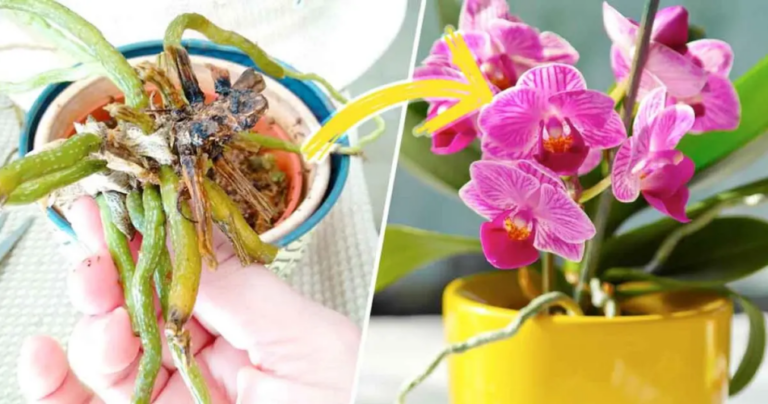
You can recognize a dying orchid by its leaves appearing dehydrated and its roots becoming soft, brown, or even black. The main cause of orchid death is overwatering, which leads to root rot. However, you can save your plant if it still has healthy aerial roots.
Step 2: Clean the orchid roots
root soil
To clean your plant’s roots, it’s important to gently remove it from the pot. Then, remove any bits of soil attached to the roots. This could be mulch, moss, or bark used in the potting mix. Then, rinse the roots with water to clean them of any attached debris.
Step 3: Cut the roots of the dead orchid
dead roots
Using disinfected pruning shears or scissors, cut off any roots that appear soft, mushy, brown, or black. Keep only roots that are green or have green tips. If the stem has also been affected by rot, trim it back just below the leaves and remove any dry or damaged leaves and petals.
Step 4: Repot the orchid
plastic pot for orchids
Repotting will allow you to give your plant a new substrate and therefore a new supply of nutrients that will help your orchid flourish again. To do this, choose a clear plastic pot so you can regularly check the condition of the roots. As for the soil, it is best if it consists of pieces of bark, charcoal fibers, sphagnum moss, or even charcoal fibers. Also consider placing clay balls at the bottom of the pot to facilitate drainage. Be sure to water the pot lightly to moisten the soil.
Read also: How to care for an orchid and make it bloom again: the step-by-step guide
Step 5: Help the orchid grow back
To revive your orchid and help it bloom again, it’s important to provide it with favorable conditions for its growth. To do this, place your orchid in a bright location, avoiding direct sunlight. This could actually burn the foliage of your plant ; instead, prefer partial shade. Not very hardy, the orchid also requires heat. Keep your pot at a temperature between 18°C and 21°C, away from drafts and heat sources, such as radiators, which dry out the air in the room. Indeed, the orchid appreciates humidity. In addition, it is recommended to water the orchid with non-calcareous water, such as rainwater, and at room temperature, to avoid causing a thermal shock that would damage the root system of your plant. Also, mist your orchid’s foliage occasionally and avoid leaving standing water in the saucer or planter. Also, be sure to protect your orchid from pests or other harmful insects, such as aphids or mealybugs.
By following these steps, you can save your dying orchid and prepare it for another bloom to decorate your home with its beautiful flowers.
Read also: How to make orchids bloom all year round? Add a single ingredient to the irrigation water