
Houseplants are essential in our homes. And for good reason: they purify the air, provide more oxygen, and enhance our living spaces. However, this living plant remains very fragile, can easily become ill, and eventually die if neglected. Sometimes, a plant may wither for no obvious reason, even though it is maintained and watered regularly.
Flies are one of the most common problems affecting houseplants. These tiny insects, barely visible to the naked eye, manage to mercilessly devour the tissues of our plants.
If you notice your houseplants drying out for no reason, it’s likely due to pests. These pests will feed on the flowers even if you take care of them constantly by watering and feeding them daily.
Read also: Why is it a good idea to always keep a bowl of white vinegar in the refrigerator?
Fortunately, there is an easy way to manage them.
potted plant
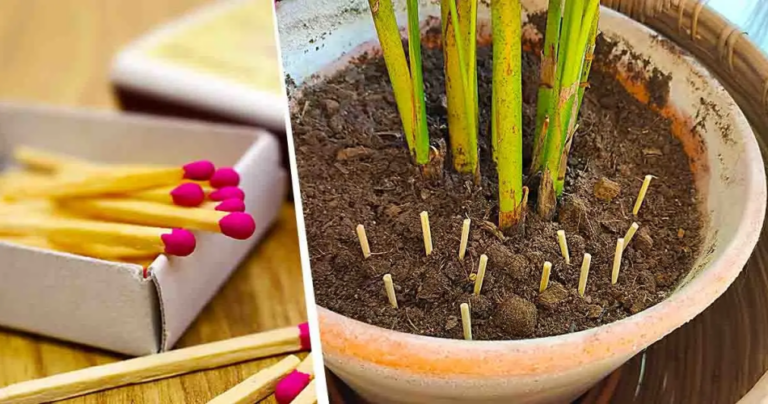
You will only need 5 to 6 regular matches, which you will stick into the soil, heads facing down, a few centimeters from the edge of the pot.
Remember to water the soil after planting. You will notice after a few days that the plant will be as strong and healthy as before.
Compared to solutions sold in specialized stores, this trick is cheaper, safer and easier to apply.
Its effectiveness lies primarily in the compounds in match rubber: sulfur, phosphorus and fluorine will thus fight parasites and constitute an excellent fertilizer for the soil.
So they won’t just protect your plant. In addition to fighting pests, they’ll also heal the plant, accelerate its growth, and extend its lifespan.
The batches normalize the metabolic processes of the plant and significantly improve its resistance to pests.
That said, in order for your plant to flower profusely, you need to add some fertilizer to it.
potted plants1
3 recipes that will help you protect your plants from all the pests and insects that regularly invade them.
Here are some natural fertilizers for indoor plants:
- Dissolve 1 gram of boric acid in 4 liters of warm water. The top layer of soil should be slightly looser (lighter) to allow water to penetrate the soil more easily. The solution should not be poured into the center, but along the sides of the pot so that the stem is not affected.
Water the plant carefully so that splashes do not fall on the leaves or stem.
Read also: Star makeup to look attractive in photos: one detail makes the difference
- Pour one tablespoon of ammonia into one liter of hot water. Follow the same application method.
Iodine
- Add three drops of iodine to a liter of chlorine-free rainwater. The plant should be watered regularly for a month, especially in spring and winter. Iodine is an excellent fertilizer for all houseplants.
Read also: How to clean and perfume the bathroom with fabric softener?