
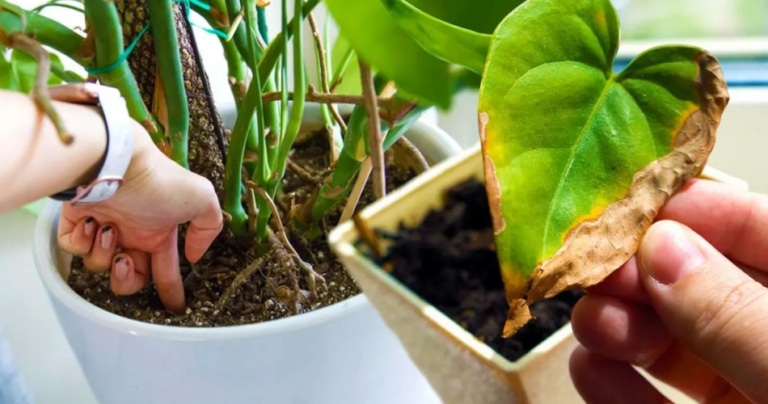
Brown leaves, drooping leaves, dry stems… these are signs that your houseplants may be drying out. These plants can require a lot of attention depending on their needs. Some require little maintenance, but others require a certain amount of focus.
If you notice that one of your houseplants isn’t looking as fresh as it originally did, it might be time to take action to get it back on track.
How to save your wilted houseplants?
If you’re new to gardening and one of these three plants is looking bleak, here’s how to save it.
Read also: 3 effective repellent plants to keep mice away from your home
The Chinese money plant or Pilea peperomioides, a trendy houseplant
silver factory
For optimal growth, this houseplant is grown in full light but indirect sunlight. However, your houseplant should not receive a lot of heat. It will thrive in cool, well-drained pots. It is recommended to water twice a week in summer and once a week in winter. Also, don’t hesitate to turn the pot to prevent the plant from becoming deformed. If you notice that the foliage of your houseplant is curling, it has received too much light and heat. Therefore, if the stems of your Chinese money plant start to droop, you are not watering it enough. However, if you see the drooping stems starting to yellow, it is a sign that your decorative plant has been overwatered and it is time to let it breathe. You can also repot it to help it regain its roots.
Aloe vera, an easy-care indoor plant
Aloe Vera
Aloe vera is a houseplant known for its medicinal properties and its ability to purify the air in your home. The advantage of this houseplant is that it doesn’t require much maintenance. It will thrive in a bright room but not in direct sunlight, which would dry out its foliage. It is recommended to water it once a week with spring water or rainwater. This plant with such precious foliage is ideal in a bedroom. Thanks to its leaves, it has the ability to absorb carbon dioxide and purify the air. If you are someone overwhelmed by everyday life, Aloe vera is a green plant made especially for you. The latter is only at risk of drying out if you don’t water it enough. You will see its branches become dry and dehydrated. On the contrary, if it is overwatered, you will notice that the color of its leaves turns brown. Excess moisture can lead to fungal growth, which can cause the Aloe Vera plant’s foliage to dry out. In this case, you should stop watering until the soil in your pot is dry.
Read also: The brilliant trick to make your plants grow quickly
Monstera, the indoor plant with tropical foliage
monster
Recognized among other houseplants thanks to its lush leaves, the monstera requires good maintenance. It is advisable to choose a pot large enough to grow a monstera. Indeed, with its XXL leaves, the monstera needs a lot of space. It is often thirsty, and regular watering and fertilization are important for the growth of this houseplant. To make things easier, you can spray its leaves with soft water to clean them. Clay pebbles or gravel can also be added to the bottom of the vase to facilitate water drainage. Take the time to repot your monstera every two years to maintain it. Like most houseplants, it should be placed in a bright room that does not receive direct sunlight. Experts tell us that if your plant’s leaves start to turn yellow, it’s time to let it go. This means you’ve overwatered it and its soil should be dry again. Conversely, if its foliage becomes brittle and turns brown, your plant is dehydrated.