
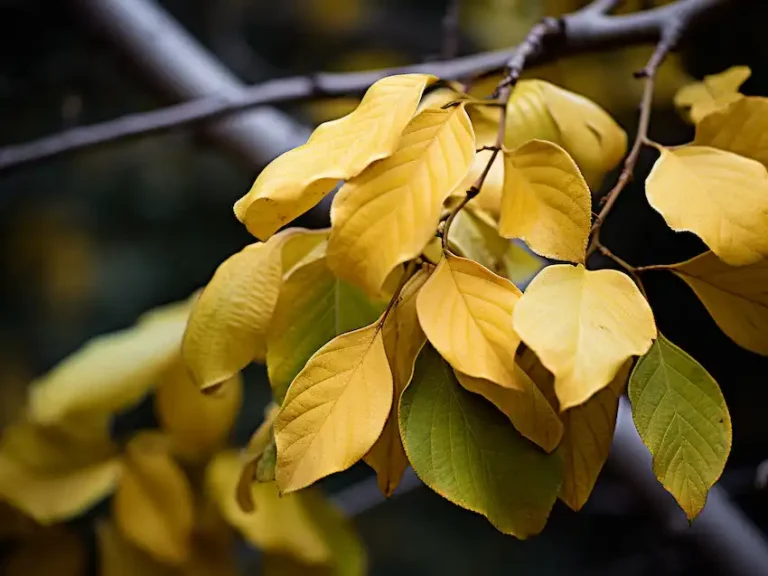
A thriving garden is a testament to meticulous care and attention. Yet, even with the best intentions, plants can show signs of distress due to nutrient deficiencies. Understanding these symptoms can be the key to revitalizing your garden and nurturing vibrant, healthy plants. Let’s examine the telltale signs of some common nutrient deficiencies:
Calcium deficiency
Indicators:
New leaves distorted and stunted
Calcium plays a crucial role in maintaining cell structure. When deficient, plants may struggle to form new cells, resulting in distorted growth and stunted leaf growth.
Home remedy : Use crushed eggshells. Rinse and dry the eggshells, then crush them into small pieces. Incorporate these crushed eggshells into the soil around the base of affected plants. As they break down, they release calcium, helping to alleviate the deficiency and strengthen the soil.
Nitrogen deficiency
old leaves on a tree
Indicators:
The old leaves are turning yellow
New leaves appear light green
Nitrogen is a fundamental component of chlorophyll, essential for photosynthesis. A lack of nitrogen can cause older leaves to turn yellow, as nitrogen is redistributed to support new growth, resulting in pale, light green new leaves.
Home remedy : Create compost tea by combining kitchen scraps, leaves, and grass clippings. Dilute the compost with water and use it to water your plants, replenishing nitrogen and promoting healthy growth.
Iron deficiency
Indicators:
New yellow or white leaves
Green veins
Iron deficiency often manifests as interveinal chlorosis, where new leaves turn yellow or white while the veins retain their green color.
Home Remedy : Use a foliar spray of diluted molasses to aid iron absorption and help plants overcome the deficiency.
Carbon dioxide deficiency
Indicators:
White deposits
The leaves die prematurely
Inadequate carbon dioxide can hinder photosynthesis, leading to the accumulation of starches or other compounds as white deposits. Additionally, leaves may wilt or die prematurely due to insufficient carbon dioxide supply.
Homemade remedy : Increase carbon dioxide levels around plants by introducing a DIY CO2 generator using yeast, sugar, and warm water.
Phosphate deficiency
yellowing at the edges of the leaves
Indicators:
Yellowing at the edges of the leaves
Development of brown spots on the leaves
Phosphorus deficiency can cause leaf edges to turn yellow and brown spots may appear due to disruption of energy transfer within the plant.
Homemade Remedy : Use dried and crushed banana peels as a natural fertilizer to improve phosphate levels in the soil.
Potassium deficiency
Indicators:
Yellowing at the edges of the leaves
Formation of brown spots on the leaves
Similar to phosphate deficiency, potassium deficiency can also cause yellowing of leaf edges. Additionally, brown spots may appear, indicating impaired nutrient transport.
Home remedy : Apply wood ash, rich in potassium carbonate, around the base of affected plants to replenish potassium levels in the soil.
Manganese deficiency
Indicators:
Yellowing of older leaves
Green spots on leaves
Yellow spots and holes in leaves
Manganese deficiency can cause a range of symptoms, including yellowing of older leaves, green spots, and the development of yellow spots and holes in the leaves.
Home Remedy : Use Epsom salt dissolved in water as a soil application to improve manganese absorption and aid in the recovery of affected plants.
Magnesium deficiency
dark veins on the leaves of a tree
Indicators:
Yellowing of the lower leaves
Presence of dark veins
Magnesium is vital for chlorophyll production. A deficiency can cause lower leaves to turn yellow, while veins remain darker due to insufficient chlorophyll synthesis.
Home remedy : Create a solution of Epsom salt and water, then water the affected plants to provide magnesium and restore chlorophyll production.
Recognizing these symptoms is the first step in addressing nutrient deficiencies. Conducting a soil test can provide invaluable information about your plants’ specific nutrient needs. Addressing deficiencies often involves amending the soil with organic matter or applying specific fertilizers to rebalance nutrient levels.
Remember, prevention is key. Monitor your plants regularly, maintain good soil health, and provide balanced nutrition to ensure a thriving garden. With a keen eye and proactive care, you can transform nutrient-deficient plants into thriving, lush specimens, enriching the beauty and vitality of your garden.