
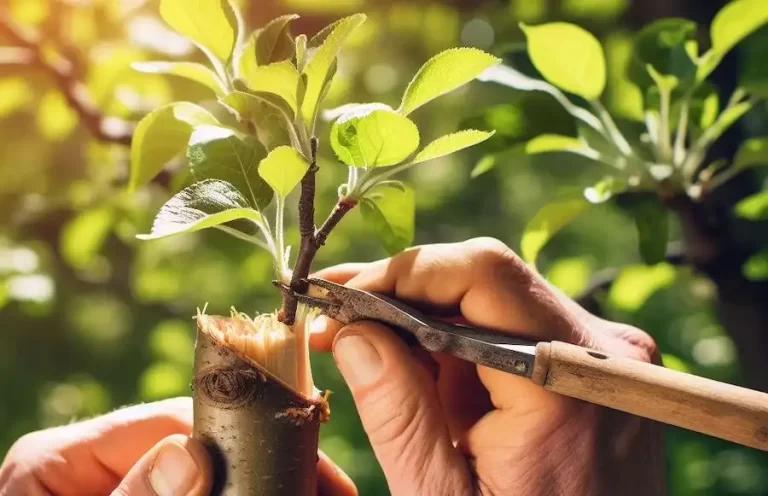
Tree propagation, the process of multiplying existing trees, is a vital skill for gardeners, orchardists, and horticulturists. This article examines several methods, including air layering, grafting, and others, to equip you with diverse and effective techniques for tree propagation.
- Air overlay
air stratification
Air layering is similar to taking cuttings but leaves the cutting attached to the parent plant until it roots. This method is suitable for a variety of plants, including tropical houseplants and fruit trees such as apples and citrus. The advantages of air layering include a continuous supply of moisture to the parent plant and the rapid production of large specimens. The best time for air layering is in spring or midsummer, using the previous or current year’s shoots. The process involves making a slit in the stem, inserting a toothpick to hold it open, adding rooting hormone, and wrapping it with moist sphagnum moss and plastic wrap. It usually takes one to three months for roots to appear before the new plant can be detached and potted. - Grafting under the bark (bark grafting)
graft trees
Bark grafting is a relatively simple technique that does not require any special tools. It is effective for branches from 1 inch to several inches in diameter. The process involves making slits in the bark and preparing the scion (the grafting material) with one long cut and one shorter cut for easy insertion. The scion is then inserted into the slits and secured, possibly with nails or tape, and the scion is protected with wax. This method is generally used for topdressing established plants and changing cultivars in fruit orchards without planting new trees. - Other methods of propagation
Cuttings : This traditional method involves taking a small section of a tree, such as a stem or branch, and encouraging it to grow roots in water, soil, or a specialized rooting medium. Successful propagation by cuttings requires appropriate moisture, temperature, and hormone treatments.
Layering : Similar to air layering but involves bending a branch toward the ground and covering it with soil. Roots grow along the buried section, allowing separation into a new tree. This method is useful for plants that are difficult to root using other methods.
Division : Used primarily for perennials, division involves separating an existing plant into parts, each capable of developing into a new individual. This method is suitable for plants that naturally form clumps or colonies.
Micropropagation (tissue culture) : A laboratory method of growing plantlets from small plant tissues placed in a nutrient-rich medium. This method is ideal for mass production of plants and is used for rare or endangered species and the production of disease-free plants.
Propagation by runners, rhizomes, bulbs, and corms : These less common methods involve using plant parts such as runners (aerial stems), rhizomes (underground stems), bulbs, and corms for propagation. Each has specific applications depending on the type of plant.
Understanding these different tree propagation methods opens up a world of possibilities for creating new plants, preserving species, and improving gardens and orchards. Each method has its own unique applications and benefits, allowing for a tailored approach based on the type of tree and the desired outcome. Whether for personal or commercial purposes, mastering these techniques can significantly contribute to the success of gardening and tree care projects.