
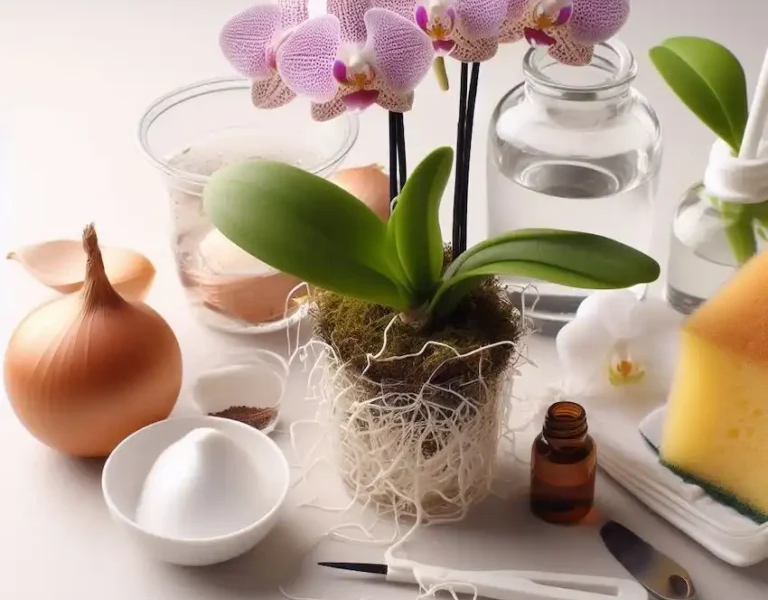
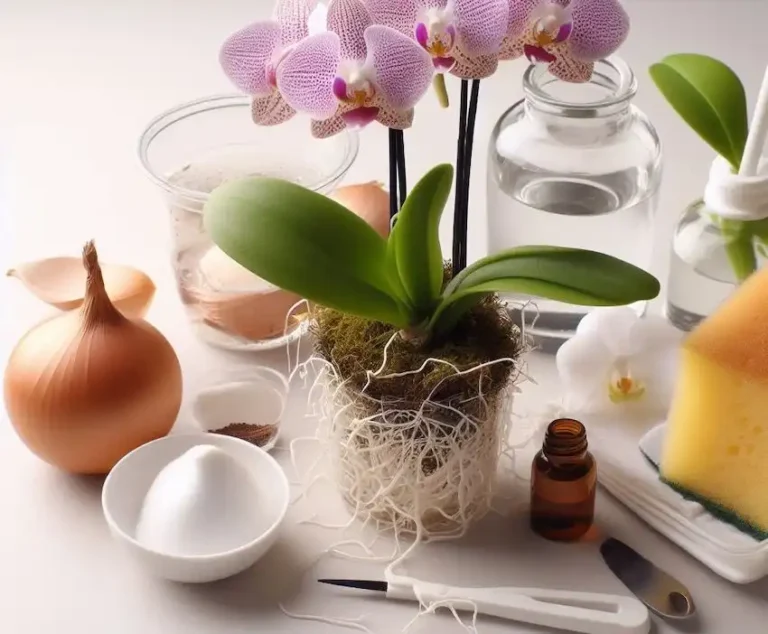
Creating an orchid garden from discarded plants can be a fascinating and rewarding endeavor. With a mix of traditional and innovative techniques, you can successfully propagate orchids. Here’s a comprehensive guide, incorporating information from multiple sources, to help you propagate orchids using simple methods.
Materials needed for orchid propagation
Orchid Cuttings: Start with healthy cuttings or keikis (baby orchids) from a mature orchid plant.
Onion Water: An excellent organic fertilizer, rich in potassium and other nutrients, beneficial for plant growth. Soak onion skins and tips in water to create this tonic.
Clean containers: preferably glass jars or plastic cups to hold the water.
Rooting Hormone: A water-soluble rooting hormone to stimulate root growth.
Sponge: To support orchid cuttings in water.
orchid cuttings onion water clean containers rooting hormone sponge
Step-by-step guide to propagating orchids
Preparing the cuttings: Select healthy orchid or keiki cuttings, ensuring each has at least two nodes or growing points. Use clean, sterile scissors or a sharp knife to remove them.
Applying Rooting Hormone: Dip the base of each cutting or keiki into rooting hormone, ensuring coverage of the nodes.
Onion Water Treatment: Soak orchid branches in onion juice for 20 minutes to utilize its antibacterial and antiseptic properties and stimulate growth.
Placement in Water: Partially submerge the cuttings in distilled or filtered water in your containers and place them in a well-lit location, avoiding direct sunlight.
Water quality monitoring: Regularly check and maintain the water level, keeping it clean and free of algae or pathogens. Change the water every one to two weeks if necessary.
Root Development: Allow time for the roots to develop, which can vary from a few weeks to several months. Ensure the roots are healthy and white before the next step.
Transferring to a growing medium: Once the roots have developed, transfer the orchids to a suitable growing medium, such as well-draining orchid potting mix or a mixture of sphagnum moss and perlite. Be careful not to damage the delicate roots during this process.
Advantages of this method
Higher Success Rate: Water propagation has a higher success rate than other methods and is suitable for both beginners and experienced gardeners.
Disease Prevention: This method reduces the risk of fungal diseases and root rot because it eliminates the need for soil.
Root Monitoring: Allows close monitoring of root growth and development, ensuring optimal conditions for healthy propagation.
Additional tips
Choose the right orchid variety: Some orchid varieties are better suited to propagation in water than others.
Using the sponge: The sponge helps support the orchid cuttings in the water, ensuring they stay afloat and receive enough moisture and air.
potted orchid
Propagating orchids using onion water and a sponge in the water is an effective, environmentally friendly, and innovative approach. This method not only uses readily available materials, but also offers a higher success rate and the ability to closely monitor the growth process. With patience and care, you can transform abandoned orchid branches into a thriving orchid garden.