
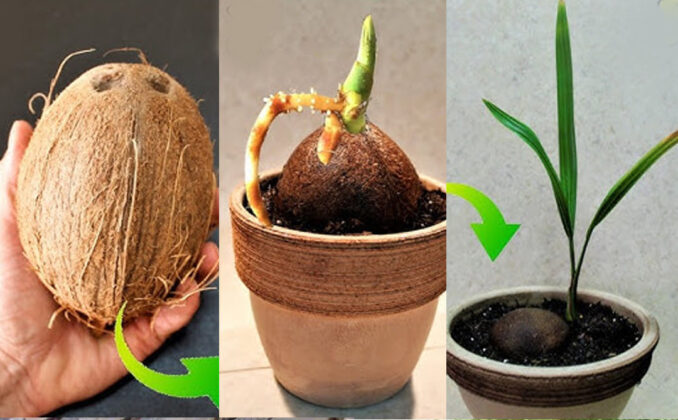
The coconut palm (Cocos nucifera) is one of the most versatile and iconic trees in tropical regions, providing not only delicious fruit but also numerous health and industrial benefits. Growing a coconut palm can be a rewarding endeavor, and growing it at home can be an exciting project. Below is a step-by-step guide on how to grow and plant a coconut palm at home.
coconut canvas
Step 1: Select a healthy coconut
Choose a fresh, healthy, and ripe coconut with plenty of water inside. Shake the coconut to ensure it contains water, indicating the viability of the seed.
Avoid coconuts with cracks, holes, or any signs of damage.
Step 2: Preparing the coconut
Remove the shell from the coconut. You can do this using a sharp knife or other pointed tool, but be careful to avoid injury.
Soak the hulled coconut in water for two to three days to promote germination.
Step 3: Select the correct location
Choose a sunny location that receives at least 6 hours of sunlight per day.
Ensure the planting area has well-drained soil to avoid waterlogging, as coconut palms do not tolerate standing water.
Consider the mature size of the tree and make sure there is enough space for it to grow, away from buildings or other structures.
Step 4: Plant the coconut
Dig a hole deep and wide enough to accommodate the coconut.
Place the coconut in the hole with the pointed end facing down and leave the top half exposed.
Carefully fill the hole with soil and water.
Step 5: Watering and maintenance
a coconut tree in the garden of the house
Water the coconut regularly, keeping the soil constantly moist but not waterlogged.
Reduce watering frequency once the plant is established, allowing the soil to dry slightly between waterings.
Apply a balanced fertilizer every few months once the tree is established to promote healthy growth and fruit production.
Step 6: Protection
Protect the young tree from extreme weather conditions such as strong winds or frost by using windbreaks or frost protection cloths.
Monitor the tree for any signs of pests or diseases and treat them promptly to prevent damage to the tree.
Step 7: Patience is the key
Be patient, as growing a coconut tree is a long-term commitment. It can take 5 to 6 years to see fruit, and a fully mature tree can take up to 10 years.
Check your coconut tree’s growth and overall health regularly, adjusting care as needed.
Growing a coconut tree at home can be a rewarding project, offering not only aesthetic pleasure but also the opportunity to enjoy fresh coconuts. It requires patience, care, and the right environment to thrive. By following the steps outlined and ensuring proper care and maintenance, you can successfully grow a healthy and productive coconut tree in your garden.
a crate of coconuts
Quick tips:
Climate : Coconut palms thrive in tropical climates with high humidity and temperatures between 70°F and 95°F.
Soil : Prefer well-drained, sandy and loamy soils with a pH between 5.0 and 8.0.
Watering : Requires regular watering to establish and less frequent but deep watering once mature.
Fertilization : Use a balanced fertilizer to provide essential nutrients for growth and fruiting.
Pruning : Occasional pruning may be necessary to remove dead or damaged fronds.
Spacing : Ensure sufficient space for the mature tree, taking into account its height and spread.