
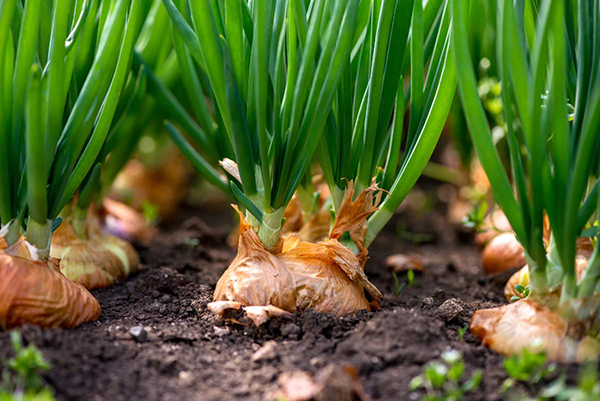
Growing onions from seed can be a rewarding process, allowing gardeners to enjoy a fresh harvest of flavorful, crispy onions. Here, we reveal the secrets of successfully growing onions from seed, covering the steps from planting to harvesting.
12
- Seed selection:
Choosing the right onion seeds is crucial. There are many varieties available, each suited to different climates and culinary uses. Look for the best type for your region, considering whether you prefer sweet or hot varieties. - Proper sowing time:
Onions are cool-season crops, so the best time to sow onion seeds is late winter or early spring. In warmer climates, planting can be done in the fall. Timing is crucial because it ensures the onions have enough time to mature before the weather becomes too hot. - Soil preparation:
Prepare the soil by incorporating organic matter, such as compost or well-rotted manure, to improve soil fertility and drainage. Onions thrive in loamy, well-drained soil with a pH between 6.0 and 7.0. - Sowing seeds:
Sow onion seeds thinly in rows, covering them lightly with soil. The seeds should be planted about 1/4 inch deep and the rows should be spaced 12 to 18 inches apart. Keep the soil constantly moist until the seeds germinate. - Proper thinning:
Once the plants are a few inches tall, thin them out so they are about 4 to 6 inches apart. This prevents overcrowding and allows the onions to develop fully. - Watering:
Onions have a shallow root system, making them susceptible to drought. Water them regularly, ensuring the soil remains moist but not waterlogged. Overwatering can cause bulb rot. - Fertilization:
Fertilize onions every few weeks with a balanced fertilizer to promote healthy growth. Avoid fertilizers high in nitrogen, as they can lead to lush foliage at the expense of bulb development. - Weed Control:
Keep the onion bed free of weeds. Weeds compete with onions for nutrients and water, which can hinder their growth. Hand-pulling or hoeing are effective ways to control weeds without damaging the onion plants. - Pest and disease control:
Monitor onion plants regularly for signs of pests and diseases, such as onion thrips or downy mildew. Implementing good cultural practices, such as proper spacing and watering, can prevent many problems. If necessary, use organic or synthetic pesticides or fungicides, carefully following the manufacturer’s instructions. - Harvest:
Onions are ready to harvest when the tops begin to turn yellow and fall off, usually 100 to 175 days after planting, depending on the variety. After harvesting, allow the onions to dry in a well-ventilated, dry place for several weeks before storing. - Storage:
Store salted onions in a cool, dry, and well-ventilated place. Properly stored onions can last for several months. Discard any onions that show signs of rot or mold.
Conclusion
Growing onions from seed can be a rewarding endeavor, yielding a bountiful harvest of flavorful bulbs. By choosing the right variety, preparing the soil properly, maintaining optimal growing conditions, and employing good cultural practices, gardeners can have a successful onion-growing experience. The fruits of this labor are versatile staples that enhance a multitude of culinary dishes, making the effort invested in growing them well worth it.