
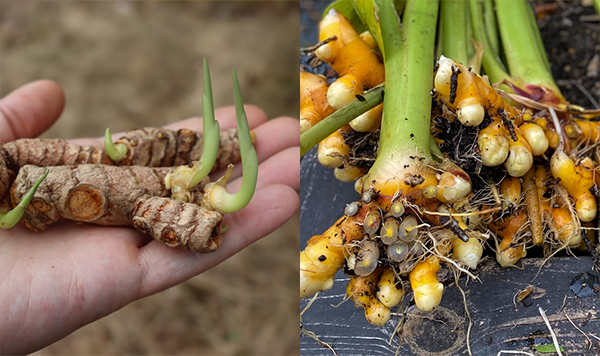
Growing turmeric, a tropical plant renowned for its edible golden rhizomes, doesn’t have to be confined to specific hardiness zones. Growing turmeric in containers allows gardeners in any zone to enjoy this aromatic spice. Below are detailed steps for successfully growing turmeric in containers, regardless of your location.
8 canvas 1
- Choose your turmeric rhizomes:
Start with healthy, fresh, and plump turmeric rhizomes. These are available at garden centers or organic grocery stores. Select ones with buds or eyes, as these are the points from which the shoots will grow. - Selecting the right container:
Turmeric plants have large leaves and can grow up to 3 feet tall, so select a large container that is at least 12 inches deep and 12 to 18 inches in diameter. Make sure the container has plenty of drainage holes to prevent waterlogging. - Soil preparation:
Use a well-draining potting soil rich in organic matter. Mix in organic compost or well-rotted manure to enrich the soil, ensuring optimal nutrients for growing plants. - Planting the rhizomes:
Plant the rhizomes 2 inches deep with the buds facing upward. If your container is large enough, you can plant multiple rhizomes, spaced at least 6 inches apart.
plant turmeric
- Provide optimal growing conditions:
Turmeric thrives in warm, humid conditions. Keep the container in a location where it receives at least 4 to 6 hours of indirect sunlight per day. Keep the soil moist but avoid overwatering. Ideal temperatures for growing turmeric are between 68 and 86°F (20 and 30°C). - Caring for the turmeric plant:
Watering: Keep the soil constantly moist, especially during the growing season.
Fertilization: Feed the plant with an all-purpose organic fertilizer every 4 to 6 weeks during the growing season.
Pruning: Regularly remove yellowing or dead leaves to promote healthy growth. - Harvest your turmeric:
Turmeric typically takes 7 to 10 months to mature. Once the leaves and stems begin to turn brown and dry, it’s time to harvest. Gently remove the soil from around the base of the plant and extract the rhizomes. Wash them thoroughly and let them dry. - Curing and storage:
Once harvested, boil the rhizomes for 45 minutes and then dry them in a well-ventilated, shaded area for at least a week. After drying, you can store the turmeric rhizomes in a cool, dark place or grind them into powder for culinary use.
a bowl of turmeric
- Wintering:
If you live in a colder area, move the containers indoors during the winter or when the temperature drops below 50°F (10°C). Maintain light and water, and your turmeric will continue to thrive.
Growing turmeric in containers is an accessible way to cultivate this beneficial spice in any zone. By selecting healthy rhizomes, using the right container and soil, and providing optimal growing conditions, you can enjoy homegrown turmeric with its rich, earthy flavor and countless health benefits. Whether you’re a seasoned gardener or a beginner, these steps can guide you through a successful turmeric growing journey, allowing you to enjoy the fruits of your labor in your culinary creations.