
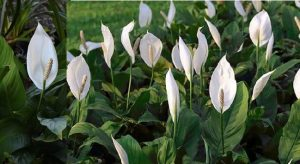
The Siberian Crane Lily—or more commonly known as the Peace Lily—is a beautiful houseplant with dark, glossy leaves. It thrives in any corner, even in relatively low light conditions.
Some people think of flowers as the white, waxy parts of the plant, but they are actually modified leaves called spathes that protect the true flowers: the hips.
Water lilies belong to a group called water lilies, and like water lilies or water lilies, they are not actually true water lilies. True lilies are called lilies, and the flower types are different.
The flowers of the peace lily resemble those of the Araceae family. Therefore, the flowers resemble other members of the Araceae family, such as the Anthurium.
The pure, contrasting white flowers are what make peace lilies so special, so it’s hard not to want as many blooms as possible.
Fortunately, there are many ways to keep your peace lilies blooming year after year.
First, let’s look at the stages of a peace lily
Peace Lily Flower Stages
no flowers?
Not exactly.
If you look closely, you’ll see the beginnings of a brand new peace lily. Look closely. The “flowers” of the peace lily grow as leaves on stems. They start out small, with spathes that wrap tightly around the bulb, hidden among the rest of the peace lily’s leaves.
Eventually, the flower stems will sprout and emerge above the canopy, and the spatula will slowly open into the familiar shape we all know, revealing the spadix inside.
Your peace lilies can last up to a month before turning yellow or green and finally brown or black. Prune the peace lily at any time to maintain the plant’s beauty.
What do you need to make your peace lily bloom?
What do you need:
1 cup cooked chickpeas
brown sugar
3 banana peels
Step by step process
Preparation
First, cut the banana peel into small pieces.
Then put the peels in the blender with the chickpeas and a spoonful of brown sugar.
Add 1 liter of water and mix until smooth.
Finally, filter the compost and mix one part with the other three parts of water.
How to apply this fertilizer
All you need to do is water your Peace Lilly as usual, preferably during warmer seasons like spring or summer. This is the best time to encourage this plant to bloom.
It’s best to apply this fertilizer once a month. This way, you’ll notice your peace lilies blooming faster and in greater numbers.
Remember: This plant requires good, but indirect, light. This factor is vital for it to thrive healthily and continuously.
The best growing medium
Like other houseplants, peace lilies need well-drained, well-ventilated soil to thrive. While they like moist soil, they should never be soggy to prevent root rot.
Most houseplant potting mixes will work for your peace lilies, but you can make your own by combining two parts potting soil, one part perlite, and one part coco coir. For peace lilies in full sun, add compost or water-retaining crystals to the mix.
When evaluating the soil, also take a look at the pot. Peace lilies love to be kept in containers, but if you see roots growing through drainage holes, it’s best to repot them.
Rooted plants have difficulty absorbing water and nutrients, leading to stress and stunted growth. This reduces the chances of flowering and can lead to several other health problems.
It is best to repot peace lilies once or twice a year in spring, depending on the size of the plant.
Heat
In its natural habitat, the peace lily grows under the trees of dense tropical forests in America. This warm climate is ideal for flowering plants.
Your growing conditions should mimic this tropical climate to promote flowering. Temperatures should be maintained at least between 65 and 85°F – the warmer it is, the better the blooms. High humidity also mimics the tropical conditions these plants prefer.
They fear drafts, so keep them away from cold air or air conditioning.
Light
In their natural habitat, peace lilies receive dappled light shaded by forest trees. Simulating these conditions indoors will encourage your peace lilies to bloom.
Place them in a bright to medium-light location, away from direct sunlight. If the light is too dim and your lily isn’t blooming, move it to a brighter spot. On the other hand, too much light also triggers photosynthesis in the spars, making them appear green instead of pure white.
Finding the right lighting requires a delicate balance. Experimentation is necessary to find the best location for the plant in your home.
Cascade
Peace lilies love humidity. They should be watered 2 to 3 times a week, preferably with distilled water, as they are sensitive to certain chemicals and compounds found in tap water. If distilled water is difficult to use, filtered water will also work.
These plants will let you know when they need water by their drooping leaves. Some people use this as an indicator of when to water. But this could be one of the main reasons why your peace lily isn’t blooming.
If the leaves are drooping to the tips or turning yellow or brown, the plant probably needed watering a few days ago. These marks are the result of stress, and stressed plants are less likely to produce many buds.
Expiry
Young peace lilies do not bloom until they are at least a year old. To speed up the process, commercial growers feed the seedlings with plant hormones to encourage early flowering.
If this is the case, you may bring home a beautifully blooming plant and care for it, only to find that it has stopped blooming. The flowers will last a month or more, but you may have more later.
Give your peace lily a little more time to mature and it should start blooming again. In the meantime, enjoy its beautiful, glossy, dark green foliage.
Flowering season
Like age, bloom time is largely beyond your control and is a common reason why peace lilies fail to bloom.
Peace lilies bloom naturally in spring and early summer. Their blooms can last for more than a month and extend into the colder months. They sometimes bloom again in the fall.
If you don’t see any flowers during the cold winter months, it’s simply part of the plant’s natural life cycle. You may see them again in spring.
Diet
Nutrients are an important part of plant health, especially when you want to improve flowering. Newly purchased peace lilies don’t need feeding, but if they’ve been in the same pot for a while and have used up all the available nutrients, fertilizing or repotting is the only way to rejuvenate them.
Use a balanced houseplant fertilizer and fertilize at least every two months. If you notice more green flowers, reduce the number of feedings to once every three months or reduce the plant food intensity by half.
This may not help the current season, but you should see an improvement in subsequent blooms.
Weak buds are also a sign of a nutrient deficiency. If the buds aren’t growing well, opt for a fertilizer rich in phosphorus. This nutrient promotes flowering and fruiting and should also encourage the peace lily to bloom.