
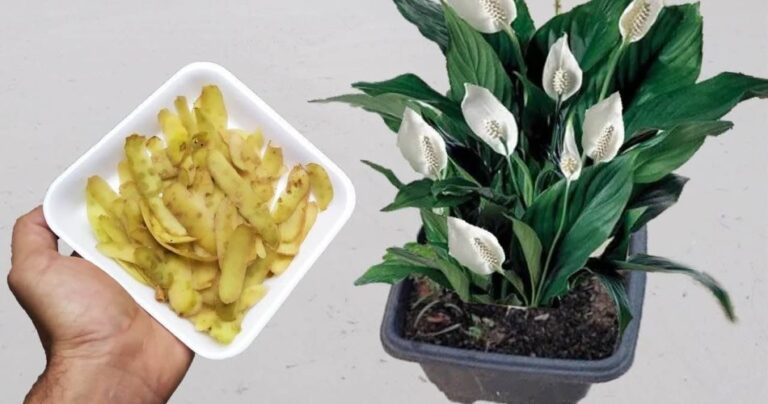
Once you learn this very useful method for making your plants more lush, you’ll never stop using it. What is it? By creating a natural fertilizer at zero cost that will bring many benefits to your plants. If you’re a gardening enthusiast or simply love plants, you’ve probably already tried to find the best way to make them grow lush and healthy.
But did you know that the solution could be found in your kitchen? Yes, you read that right! With this trick using food scraps, you can create a natural and effective fertilizer for your plants. Don’t throw away those potato peelings: discover how to transform them into precious food for your beloved flowers and vegetables.
More beautiful and lush dishes with this tip: all the benefits of waste plants
Have you ever thought about using potato waste to feed your plants? It’s unbelievable but true, but one of the most common and practical items in your kitchen can become a natural and effective fertilizer . Here’s how to make it: After peeling four potatoes, let the peelings dry in the sun for 48 hours. Then, blend them into a fine powder.
To use this organic fertilizer, dilute it in water (two tablespoons per liter) and spray the solution on the leaves or pour it at the base of the plant. It’s important to remember that composting takes time and patience, so you won’t regret it if you decide to try this inexpensive alternative to expensive chemicals.
Factory
But what are the concrete benefits for your beloved plants? This natural fertilizer is rich in potassium , phosphorus, and other essential nutrients that promote healthy root and flower growth. Frequent use of compost can improve the soil structure in your garden or plot, thus reducing water erosion.
Finally, by saving money on expensive chemicals, you’re also helping the environment by reducing your consumption of toxic substances that are harmful to both you and the plants themselves. So don’t hesitate: try this easy and eco-friendly technique today.
Why use this natural fertilizer with potato peelings
Why use this natural fertilizer with potato peels? Here are some reasons why you should opt for this organic and eco-friendly solution.
First, potato skins are rich in nutrients such as potassium , nitrogen and phosphorus, which are essential for plant growth. By using this natural compost you will therefore obtain a complete and balanced diet for your plants.
Using homemade fertilizer made from biodegradable materials helps reduce food waste that would otherwise end up in the trash. In this way, you’ll also be contributing to environmental protection.
Potatoes as fertilizer
Not only that, but making your own fertilizer from potato peelings is also cheap and convenient . There’s no need to buy expensive products from the store when you can create an equally effective solution at no cost.
Finally, choosing an organic fertilizer means avoiding the use of chemicals that are harmful to human and animal health and the surrounding ecosystem. Using potato peels as a natural fertilizer can provide numerous benefits to your plants and the environment in general.
Other types of natural fertilizers
There are many types of natural fertilizers besides potatoes. Here are some examples:
Compost : Composting is a process in which organic waste is broken down and transformed into a nutrient-rich material for plants;
Green manure: Cover crops such as clover or vetch can be planted as green manure. These plants relieve soil compaction and add nutrients to the soil as the roots decompose;
Seaweed Fertilizer : Some seaweeds contain essential plant nutrients such as nitrogen, phosphorus, and potassium. Seaweed extracts can be used as natural fertilizers;
Manure : Animal manure (e.g., cow, horse, or sheep manure) is a nutrient-rich natural fertilizer that can be used to improve soil and plant health;
Bone meal : Bone meal provides phosphorus to plants and is a source of calcium and other important nutrients. It can be used as a fertilizer in the garden;
Wood Ash : Wood ash can be used as a source of potassium for plants.
All you have to do is experiment and find the fertilizer that best suits your soil and the type of plants you have in the garden or at home.