

on Harvesting Bountiful Harvests: Homemade Fertilizers for Potted Potatoes
Unlocking the potential of container-grown potatoes isn’t just about soil and sun: it’s also about nourishing them with nature’s own elixirs. Delve into the art of homemade fertilizers, fifteen unique blends meticulously crafted to promote healthy potato growth. From potassium-rich banana peel potions to nutrient-dense vermicompost teas, discover the secrets behind each concoction’s benefits, recipes, and precise application. Enhance your container gardening experience with these handcrafted formulas, each promising a bountiful harvest in the comfortable confines of your own garden.
Homemade Fertilizer for Potatoes in Containers
- Compost tea
Benefit: Rich in nutrients, increases soil fertility and promotes beneficial microbial activity.
How to make: Mix the compost with water in a ratio of 1:5 (compost to water) in a container. Let it steep for a few days, stirring occasionally.
How to use: Dilute the compost tea with water (ratio 1:10) and apply it directly to the soil around the potato plants.
Frequency: Apply every 2 to 3 weeks throughout the growing season. - Banana peel fertilizer
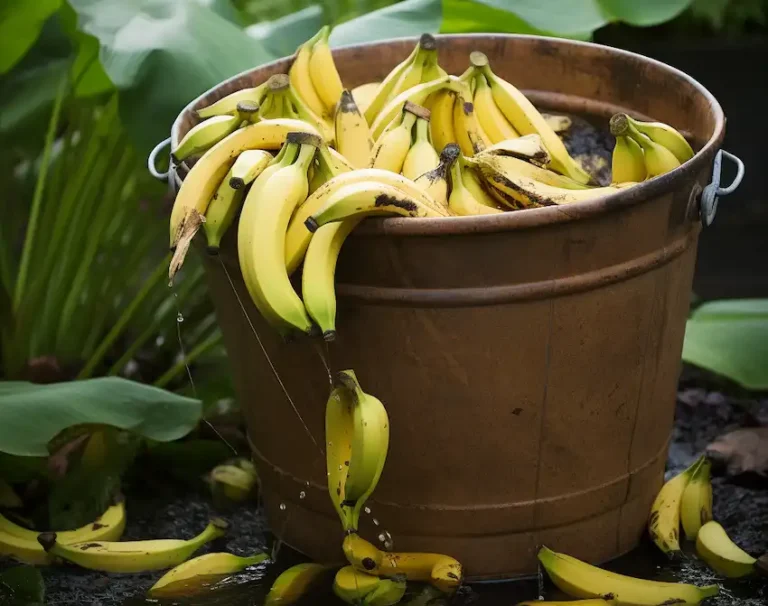
banana peel fertilizer
Benefits: Rich in potassium and phosphorus, promoting root development and flower and fruit production.
How to prepare: Soak banana peels in water for a few days, then strain the liquid.
How to use: Dilute the banana peel liquid with water (ratio 1:5) and use it as a soil drench or foliar spray.
Frequency: Apply every 2 to 4 weeks during the growth period. - Epsom salt solution
Benefit: Provides magnesium, promoting overall plant growth and improving nutrient absorption.
How to prepare: Dissolve 1 to 2 tablespoons of Epsom salt in a gallon of water.
How to use: Water the potato plants with the Epsom salt solution.
Frequency: Apply every 4 to 6 weeks during the growing season. - Eggshell powder
Benefit: Provides calcium to prevent blossom end rot and promotes root development.
How to: Crush and grind carefully cleaned eggshells into a fine powder.
How to use: Sprinkle eggshell powder around the base of the potato plants.
Frequency: Apply once at planting, then every 4 to 6 weeks. - Nettle fertilizer
a bucket with nettle
Benefit: Rich in nitrogen, stimulates lush foliage growth and overall plant vigor.
How to do it: Soak the nettles in water for a few weeks until the water turns dark.
How to use: Dilute the nettle liquid with water (ratio 1:10) and use it to water the plants.
Frequency: Apply every 3 to 4 weeks during the growing season. - Fish emulsion
Benefit: Rich in nitrogen, promotes leaf growth and overall plant health.
How to prepare: Mix fish scraps with water in a ratio of 1:3 and let them decompose for a few weeks, stirring occasionally.
How to use: Dilute the fish emulsion with water (ratio 1:5) and apply it as a soil drench.
Frequency: Apply every 3 to 4 weeks during the growing season. - Seaweed Fertilizer
Benefit: Abundant in trace elements and growth hormones, supports plant growth and resistance to stress.
How to prepare: Rinse the dried seaweed thoroughly and soak it in water for a few days. Strain the liquid.
How to use: Dilute the seaweed liquid with water (ratio 1:10) and use as a foliar spray or soil drench.
Frequency: Apply every 2-3 weeks throughout the growing season. - Manure tea
Benefit: Rich in nutrients like nitrogen, phosphorus and potassium, improves soil fertility.
How to: Soak well-aged manure in water for several days to create a concentrated liquid.
How to use: Dilute the manure tea with water (ratio 1:5) and apply it around the base of the potato plants.
Frequency: Apply every 3 to 4 weeks during the growing season. - Coffee grounds
coffee grounds for the garden
Benefit: Contains nitrogen, potassium and other minerals, contributes to soil structure and acidity.
How to use: Mix coffee grounds directly into the soil around potato plants.
Frequency: Apply once every few weeks, but avoid excessive use due to the risk of acid buildup. - Wood ash fertilizer
Benefit: Provides potassium and helps increase soil pH.
How to use: Sprinkle wood ash sparingly around potato plants.
Frequency: Apply once during the planting phase, then as needed to maintain soil pH. - Vermicompost tea
Benefit: Packed with nutrients and beneficial microbes, improves soil structure and plant health.
How to do it: Soak the worm compost in water for a few days, stirring occasionally.
How to use: Dilute the vermicompost tea with water (ratio 1:5) and apply it as a soil drench.
Frequency: Apply every 2 to 3 weeks during the growing season. - Bone meal fertilizer
Benefit: Rich in phosphorus, promotes root development and flowering.
How to use: Sprinkle bone meal around the base of potato plants during planting.
Frequency: Apply initially during planting and reapply every 6 to 8 weeks if necessary. - Green tea fertilizer
Benefit: Contains antioxidants and nutrients, helps plant growth and disease resistance.
How to prepare: Prepare green tea and let it cool to room temperature.
How to use: Use the cooled green tea to water the potato plants.
Frequency: Apply every 3 to 4 weeks during the growing season. - Molasses solution
Benefit: Feeds beneficial soil microbes, promotes nutrient absorption and improves soil structure.
How to prepare: Mix one tablespoon of molasses into one gallon of water.
How to use: Water the potato plants with the molasses solution.
Frequency: Apply every 3 to 4 weeks throughout the growth period. - Grass clippings mulch
grass clippings mulch
Benefit: Adds nutrients to the soil as it decomposes and helps retain soil moisture.
How to use: Spread a thin layer of dried grass clippings around the potato plants as mulch.
Frequency: Apply periodically as needed for moisture retention and soil enrichment.
These homemade fertilizers provide a full range of nutrients and condition the soil to promote healthy container potato growth. Now that we have a collection of 15 different fertilizers, are you ready to discuss their optimal combination and use for the potato growing season?
Seasonal fertilizer combination for potatoes in containers
First growth stage (planting):
Eggshell Powder: Sprinkle around the base of plants for initial calcium support.
Bone Meal: Incorporate into the soil when planting for phosphorus and root development.
bowl with eggshell
Vegetative growth stage:
Compost Tea: Apply alternately with other liquid fertilizers (fish emulsion, seaweed fertilizer, vermicompost tea) every 2-3 weeks to improve overall plant health and nutrient uptake.
Nettle fertilizer: Use as a foliar spray or as a soil drench to provide nitrogen, especially during the growing season.
Flowering and tuber formation:
Banana Peel Fertilizer: Apply to promote flower and tuber formation due to its high potassium content.
Manure Tea: Introduce to maintain soil fertility and provide a balanced nutrient profile for tuber development.
Overall maintenance:
Coffee grounds: mix periodically into the soil for a continuous supply of organic matter and minerals.
Wood ash fertilizer: Use sparingly to maintain soil pH and supplement potassium.
Additional Boosts (Optional):
Seaweed Fertilizer: Apply during times of stress or to stimulate overall growth.
Green Tea Fertilizer: Use as an additional antioxidant and nutrient supplement.
By using a combination of these fertilizers strategically throughout the growing stages, you will provide potato plants with a diverse range of nutrients and support their different growth phases.
It is important to monitor your plants for signs of deficiency or excess and adjust your fertilization program accordingly. Always remember that moderation is key, and overfertilization can be detrimental to your plants. Furthermore, these suggestions can be adapted based on specific soil conditions, climate, and individual plant needs.
a crate of potatoes
As you tend your container garden of thriving potatoes, remember that the magic isn’t just in the harvest, but also in the journey: infusing your gardening with the art of homemade fertilizers adds a touch of craftsmanship to nature’s web. Armed with these organic blends, you’ve opened the door to a world where each carefully concocted potion breathes life into your plants, promising not only healthy growth but also a delicious yield. Embrace the alchemy of homemade fertilizers, and may your future harvests be as bountiful as the care you invested in crafting them.