
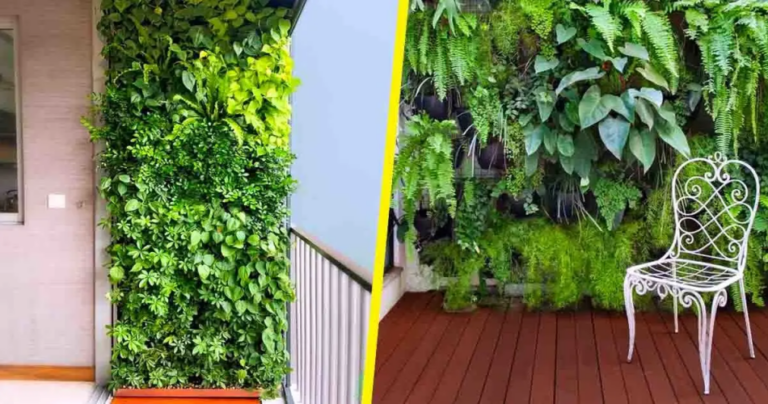
There’s no shortage of ideas for decorating your interiors, especially if you love greenery. In this case, you can opt for potted indoor plants, or better yet, create a green wall. A green wall is a wall where plants, especially climbing plants, grow vertically. Discover how to create a living green wall in any space.
In addition to being aesthetically pleasing, a green wall offers other benefits. It purifies the ambient air and increases the humidity in the home when the air is dry in winter due to heating, while also protecting against noise.
green wall of the house
How to create a green wall?
Here are the steps to follow to create a DIY green wall, without calling a professional.
Also read: How to attract a cat to the litter box: 7 practical tips
Choosing the right location for the green wall
The location of your green wall is important. It’s what allows your plants to live a long life and not wilt. Since green plants love light, it’s important to place the wall in a bright spot, avoiding direct sunlight to avoid burning the plant foliage. Also, make sure your green wall isn’t near a window to avoid the winter cold, which can damage plants.
After choosing the room that will house the green wall, choose the wall that will act as its support. Then, mark the location of your green wall on the wall of your choice using a tape measure and a pencil. This will help you correctly position the frame that will serve as the green wall. This can be prefabricated or built by yourself.
Creation of the framework which will act as a green wall
green wall
To do this, take a wooden pallet and cover the inside with a thick sheet of plastic. Use scissors to cut strips of the sheet, which you will then secure to the inside of the pallet using an electric staple gun. Make sure the tarp covers all the parts that will contain soil. The sheet will protect the pallet from mold and rot caused by irrigation. If you don’t have an electric staple gun, you can secure the tarp with nails and a hammer. Then place a layer of horticultural fabric inside the pallet, on top of the tarp. This fabric, often black, helps retain water, creating a humid environment favorable to plant growth. Just like you did with the tarp, cut strips of horticultural fabric with scissors and attach them. After lining the inside of the frame, cover the back of the pallet with horticultural fabric and then a piece of plastic sheeting, to prevent water and soil from escaping through the back of the frame.
Installation of a green wall
First, attach the frame to the wall using screws and a screwdriver, then build your living wall. To do this, cover the ground with an old sheet or rag to avoid soiling and fill the compartments or shelves of the frame with soil. Then add a slow-release fertilizer to nourish your plants and push the plants of your choice into the soil. You can choose philodendrons, climbing plants, or ivy. You can also add succulents to your wall for an easy-to-maintain vertical garden.
Wall plants
Keep the wall green
If your wall is without light, don’t hesitate to install a horticultural lamp , which promotes the growth of your plants, even during the less sunny months, in addition to stimulating photosynthesis. Furthermore, to know when to water and fertilize your plants, you simply need to know the growing conditions of each variety of green wall.
Tip: If you decide to turn to a professional for the installation of your green wall, it is important to choose the technique that suits you.
Also read: If you have this plant, you’re in luck: why is it so essential at home?
– Hydroponics: involves using an inert substrate as a support. This can be coconut fiber, rock wool, or plant felt. The substrate is attached to a panel, such as a waterproof PVC sheet, and the plants are inserted into the substrate. This is where they take root and grow. The advantage of this system is that it does not degrade over time and does not pollute the water. This is why it works by recycling irrigation water.
– The so-called classic culture: this is an alternative to hydroponics and consists of using an organic substrate such as peat, compost or zeolite. The substrate can be inserted into a metal cage or a plastic module, to later accommodate the plants. Unlike hydroponic culture, this organic system degrades and pollutes the water , which is loaded with organic matter and cannot be recycled to irrigate the plants.
Also read: How to save vegetable oil? One bottle is now enough for 3 months instead of one month