
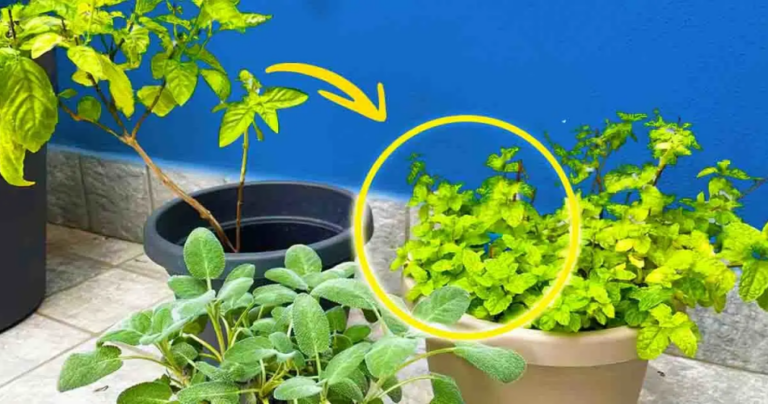
Winter is the most challenging season for many of our aromatic plants, especially those grown outdoors. Discover some simple and effective tips that can help you keep them healthy, fragrant, and protected from winter. One thing is certain: you’ll have a lush garden all season long!
Balcony plants can suffer particularly during the winter when temperatures are very cold. Plants exposed to these temperatures risk drying out and dying.
It is essential never to neglect this issue.
Read also: Don’t throw away your old bras: here’s a great way to reuse them
That’s why it’s essential to know the characteristics of each plant. Here’s how to care for the most common aromatic plants.
Wise
This perennial plant retains its fragrant leaves even in cold weather. Therefore, if you notice the leaves falling off, it means they are affected by low temperatures.
In winter, be sure to water your sage very sparingly to keep the soil moist. Water every 15 to 20 days, using very small amounts of water.
Sage can withstand very low temperatures, below 0 degrees Celsius.
If you start to see its leaves turning yellow or darkening, you should bring it indoors.
Always remember to protect it from the wind by placing it on the balcony in a poorly ventilated area.
Even in winter, you can harvest some of these houseplants to scent your whole house!
Rosemary
Like sage, rosemary is also a perennial plant and therefore retains its leaves even during the cold season.
It is one of the hardiest aromatic herbs, so it rarely suffers from the cold, but the shape of its branches can be damaged if the wind is very strong.
Keep it in the sun, without fear of direct light, which poses absolutely no danger to the plant, especially in winter.
basil
Basil
Keeping basil alive during the winter months isn’t always easy.
The best thing to do is to place this plant on a windowsill so that it receives plenty of sunlight. This plant generally does not tolerate temperatures below 10 degrees Celsius.
Losing its leaves doesn’t mean the plant is dead. Sometimes, simply moving it to a sunny spot will help it regain its shape. Leaves tend to grow back when temperatures exceed 20 degrees Celsius.
Keep basil away from direct heat sources such as fireplaces or stoves, which dry out the air too much and damage the plant.
oregano-1
Oregano
This plant retains its leaves even in cold weather. However, when temperatures drop, it tends to lose its leaves and dry out.
It is not always necessary to bring this plant indoors to protect it from the cold. It is possible to protect it with a breathable nylon sheet or use mulch.
To ensure it is protected, it is sometimes necessary to bring it inside when the temperatures are unfavorable.
While oregano needs little watering in summer, stop watering in winter and water the soil sparingly when it is dry.
thyme
thyme
More delicate than the others, thyme is particularly fragile in winter.
In this season, even if you bring it indoors, it loses its leaves and becomes dry but it can survive if the temperatures drop very low.
Be patient and place it in a bright enough spot in your home, as thyme receives direct sunlight.
Also read: How to protect your home from thieves when you go on vacation? The trick that discourages them
NB : If you keep it in the garden and it has formed fairly dense bushes, you can simply mulch the soil to protect it from the cold.
Caution: If following the above advice causes your aromatic plants to dry out, ask your florist or gardener for help.
Read also: Don’t open this type of SMS: it steals your data and can empty your bank accounts