
on How to care for orchids so they bloom every year?
Recognizable among thousands, the orchid is a plant of tropical origin that stands out for its spectacular flowers oscillating between a variety of colors, ranging from white to pink, mauve, blue, yellow, and orange. Its elegant touch and exotic charm make it one of the most sought-after and appreciated indoor plants. Some even say it brings magic into the home. Personified as “the plant of seduction,” according to the principles of Feng Shui philosophy, the orchid alone represents love, joy, boldness, fertility, beauty, purity, and hope.
Its origins are varied; it’s a flower that grows mainly in tropical areas, but is widespread throughout the world. It’s available in 25,000 species: however, it’s better to favor the more classic ones that remain easier to grow, such as the moth orchid. Admittedly, this pretty plant is generally considered a delicate and ephemeral flower. When its roots are unhealthy, its leaves tend to wilt, turn yellow, and rot. But if you follow our good advice and suggestions to the letter, you can expect a longer lifespan.
Find out how to properly care for this unique plant to have beautiful orchids and make them live as long as possible!
Also read: The benefits of a bicarbonate foot bath
The light
orchid
Location is key! To bloom well, this exotic plant needs plenty of light. The orchid likes strong light, but not direct sunlight. Therefore, it’s best to place it near a window. If the exposure is south, a curtain will be suitable to filter UV rays. It will also find a privileged place in the bathroom where heat and humidity mix.
The heat
As tropical flowers, orchids love warmth. In spring and summer, you can keep them outdoors on your balcony or terrace, as long as the nighttime temperature doesn’t drop below 15°C. The rest of the year, it’s always best to keep orchids indoors, near a window and never near a direct heat source such as a fireplace or radiator. It’s also important that orchids are kept in a well-ventilated area with air circulation.
If you live in an apartment, get into the habit of opening the windows or turning on a fan during the summer when it’s very hot.
water and humidity
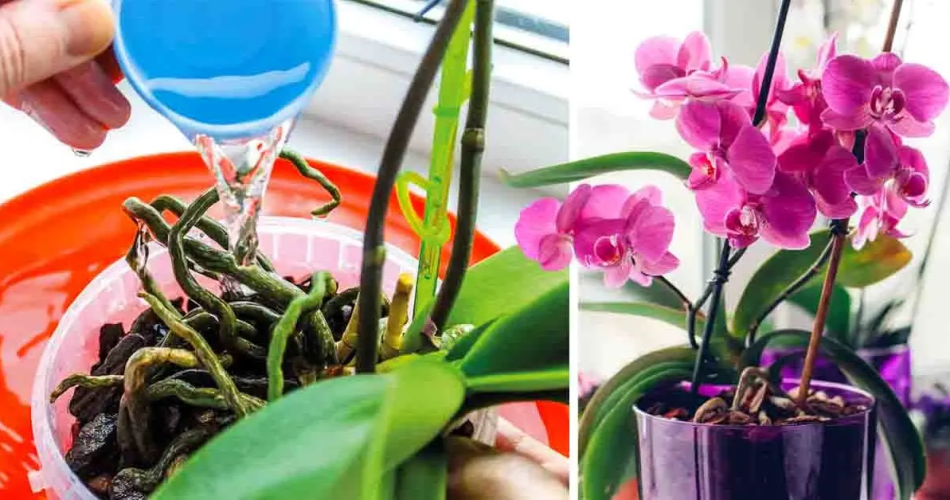
water the orchids
The amount of water an orchid needs generally depends on the variety, the season, and the temperature. Orchids are normally watered two or three times a week, but in some cases, the plant can even be watered once every two weeks. The key is to always check the condition of the soil; if it is too dry, water the plant.
Using a transparent vase is also effective because it allows you to better control the humidity of the plant. Note that the best way to water it is by immersion: the pot should be submerged in water up to 3/4 of its height. Leave it like that for a few minutes so that the plant absorbs all the water it needs. A little tip: if you feel that the pot is lighter than usual, then don’t wait any longer and water your orchids!
In summer, you can use a spray bottle to water your orchids, but you should be careful not to get too much water between the leaves and flowers. If your home’s humidity is normally below 40%, use the spray bottle method to water your orchids daily. If your home is very humid (over 60%), your flowers may develop mold. It’s best to use a dehumidifier!
It’s up to you to learn how to properly measure the amount of water to prevent your orchids from wilting.
fertilizer
The orchid is not very demanding; it can be easily fertilized with liquid fertilizer once a month. Except when it is in full bloom or during the growth period: in this case, a fertilization every 15 days is necessary to promote the development of healthy and long-lasting flowers. After fertilizing the plant, you should not water it for at least 24 hours, otherwise the fertilizer could be diluted and less effective.
The best orchid fertilizers are nitrogen-based, which strengthens roots and leaves.
Protecting orchids from disease
cochineals
Like most plants, orchids are susceptible to bacterial or mold infections. In the case of mealybugs, the best treatment is to remove infected leaves by cutting them with scissors.
You can also opt for a natural repellent solution like Marseille soap mixed with a little water. Simply spray the plant with a sprayer to control this annoying pest.
In addition to ensuring optimal humidity levels, you can also use a bicarbonate and water-based remedy: spraying this remedy on the plant will combat mold and drive away unwanted pests.
NB: Always check that the soil is not too wet and that the leaves are clean and dry. If they are stained, you should still cut them.
Also read: How to take care of your hair after winter?
Floor
The best soil for orchids is one that promotes rapid drainage. Therefore, it’s best to choose products made from bark or sphagnum moss, which provide this plant with a solid and nutritious base to thrive. Always be careful how you water the soil!
Remember: orchids need spraying their foliage in dry weather and repotting every two years. They cannot tolerate overwatering, sunburn, or cold drafts. Beware of aphids, mealybugs, and spider mites, which tend to weaken them considerably.