
Who doesn’t love having beautiful bouquets of fresh flowers at home? They instantly add an elegant and welcoming touch. Purchased from a local florist or given as a gift by a guest, cut flowers immediately find their place in a pretty vase displayed in the living room. Unfortunately, if you don’t take proper care of them, they will wilt after a few days. And it’s with a pang of regret that we find ourselves forced to part with them. However, there are a few interesting little tricks that can help you take care of them to keep them looking good for longer.
It’s inevitable: eventually, fresh flowers wilt or their stems rot. But to enjoy their beauty, freshness, and intoxicating fragrance a little longer, you can always circumvent the inevitable with natural solutions. Your current savior? Sodium bicarbonate. Yes, it’s on all fronts! This natural and versatile product, which we readily use to simplify various household chores, also has the ability to extend the life of your floral bouquet, as well as intensify its fragrance.
Learn how to use it wisely so that it enhances your beautiful flowers!
Also read: Be careful, here is the correct way to charge a cell phone to extend the battery life
How to store cut flowers from the market?
You’ve probably received a beautiful bouquet of freshly cut flowers for a birthday, holiday, or special occasion. Unfortunately, chances are you didn’t enjoy it for long. In fact, cut flowers purchased from a florist tend to wilt much faster than those you might pick from the garden.
The reasons are varied. The most common is that these flowers are usually transported from flower plantations in refrigerated crates over long distances. While being in a cold environment allowed them to flourish and remain beautiful, it also harmed their health.
Submerging these flowers in a vase of cold tap water can easily cause them to wilt the next day. To avoid this, soak them in room temperature water instead.
Also, remember that the stem of each flower should be cut back about two centimeters. This is because the ends of the stems can dry out more quickly because they absorb water poorly and rot easily. This leads to the death of the flower. However, caring for your cane doesn’t stop at the initial cut. Every two days, you should cut it back about an inch to prevent rot. Also, avoid leaving the leaves submerged in water, or they will be invaded by bacteria and risk rotting.
Finally, remember to place the pot in a cooler place, without drafts or direct sunlight.
Extend the life of cut flowers with baking soda
Flowers
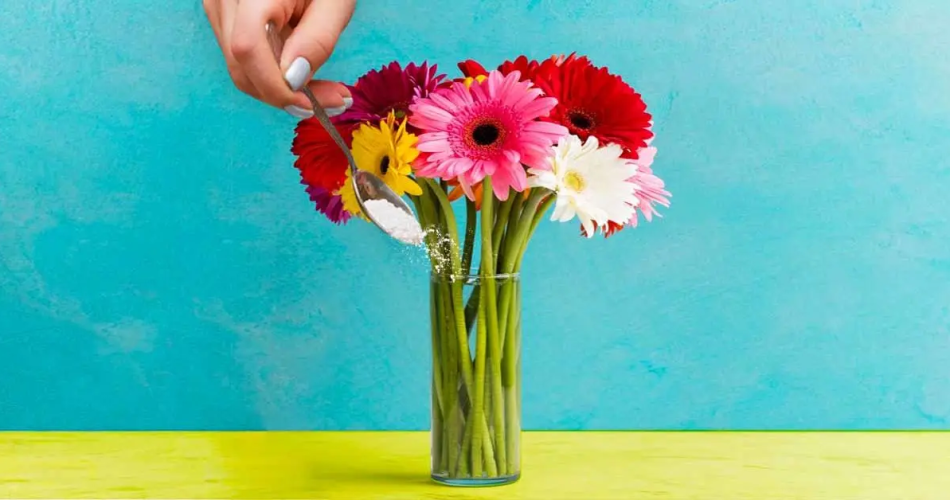
To maximize the life of your cut flowers, you’ll want to keep some baking soda on hand. Every time you change the floral water, every other day or as needed, add a tablespoon of baking soda to the water and mix well.
Sodium bicarbonate
This white powder has excellent cleaning and disinfecting properties, eliminating any bacteria that could harm plants. What’s more, this natural product also intensifies the fragrance of flowers!
How to grow roses in pots?
Of course, among the 2,000 varieties of roses, only a few are suitable for growing in pots, especially the less bushy and thorny ones. In any case, you can choose the most suitable container by following the criterion of the proportion between the length of the flowers and the capacity of the vase.
Flower pot
Generally, a five-liter vase of water is sufficient if the roses you have chosen or received do not exceed 50 centimeters. If they exceed this height, you will need a 12-liter pot. The first requirement for planting a rose bush at home is that the pot be large enough, at least 50 cm deep for deep rooting. It must also have drainage holes to prevent the roots from rotting. For a good substrate, choose clay pebbles and an organic fertilizer specially designed for roses. Water regularly to avoid air pockets in the pot. Remember to prune the stems and remove any twigs.
Also read: If you do this before washing, you will extend the life of your washing machine by 10 years
How to grow roses in the garden?
Ideally, sowing should be done in autumn. In addition to choosing the right soil and the location where the plant receives light and sun, it’s very important to pay attention to certain factors. First, the distance between plants: no less than 70 centimeters apart, and even up to one meter for greater safety. Second, avoid planting roses where you’ve just uprooted others, as they’re bound to be diseased. Always choose rich, light, and well-drained soil.
Roses are cold-resistant, but they need plenty of sun for beautiful, abundant blooms. Choose a sunny location, especially one sheltered from the wind. Avoid areas where the soil is too wet and where water tends to stagnate. Rose roots hate being soaked in water; they can even get sick.
Also read: To extend the life of your phone: charge it like this from now on