
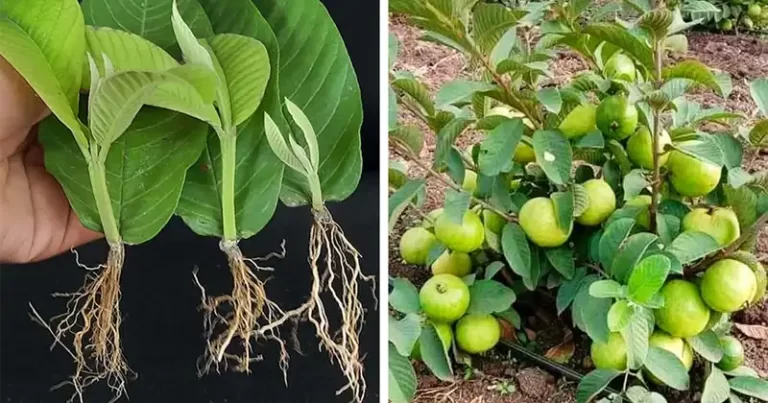
Guavas (Psidium guajava) are known for their delicious fruit and are grown in tropical and subtropical regions worldwide. Although guavas are usually propagated from seeds, cuttings, or air layering, it is possible to grow guavas from guava leaves. While this may not be the most common method, it can be a worthwhile experience for gardening enthusiasts. This article will guide you through the steps of growing guavas from guava leaves. Materials you will need: Healthy guava leaves from a mature guava tree A clean, sharp knife or scissors Rooting hormone (optional) A pot with well-draining soil or a seed tray Plastic bags or plastic wrap A warm, bright location with indirect sunlight Step-by-Step Guide: 1. Leaf Selection: Start by selecting healthy, mature guava leaves from a healthy guava tree. It is essential to choose leaves that are free of pests and diseases, as these can affect the success of leaf propagation. 2. Leaf Cuttings: Using a clean, sharp knife or scissors, cut the guava leaves into sections, ensuring that each section includes part of the midrib. Each cutting should be approximately 4 to 6 inches in length. If you have access to several healthy leaves, consider taking multiple cuttings to increase your chances of success. 3. Rooting Hormone (Optional): Although not required, using a rooting hormone can improve the chances of successful root development. If you decide to use a rooting hormone, dip the cut end of each leaf cut into the hormone according to the manufacturer’s instructions. 4. Planting:growing guavas in potsPlant the prepared leaf cuttings in a pot with well-draining potting mix or soil. You can plant them horizontally with the cut end partially buried in the soil. Plant multiple cuttings in the same pot or tray, spacing them a few inches apart. 5. Enclose in plastic: Cover the pot or seedling tray with a clear plastic bag or plastic wrap to create a mini greenhouse effect. This will help maintain humidity around the leaf cuttings, which can aid rooting. 6. Provide proper care:Place the pot or tray in a warm location with indirect, direct sunlight. Maintain consistent moisture in the soil by lightly misting the cuttings or watering them as needed. The soil should remain consistently moist but not waterlogged. 7. Patience: Root development can take time, ranging from several weeks to several months. Be patient and continue to care for the cuttings during this time. Keep an eye on the humidity inside the plastic casing, as it should remain relatively high. 8. Transplanting: Once the leaf cuttings have developed a healthy root system and become small plants, they can be transplanted into larger pots or directly into your garden. Ensure they receive adequate sunlight and water as they continue to grow. Tips and Considerations: Not all guava leaves will successfully root and grow into new trees using this method. Success rates may vary. Some guava varieties may be more suited to leaf propagation than others. Experimentation may be necessary to determine the best results. Be careful not to overwater leaf cuttings, as excessive moisture can lead to rot. Maintain a warm and humid environment for leaf cuttings during the rooting phase to promote successful propagation.a basket of guavaIn conclusion, while growing guavas from guava leaves can be an interesting and educational gardening project, it is essential to be patient and aware that success is not guaranteed. For a higher success rate and more predictable results, many gardeners prefer to propagate guavas from seeds or cuttings. However, with the proper care and attention, you may be able to enjoy the satisfaction of growing a guava tree from a leaf cutting.