
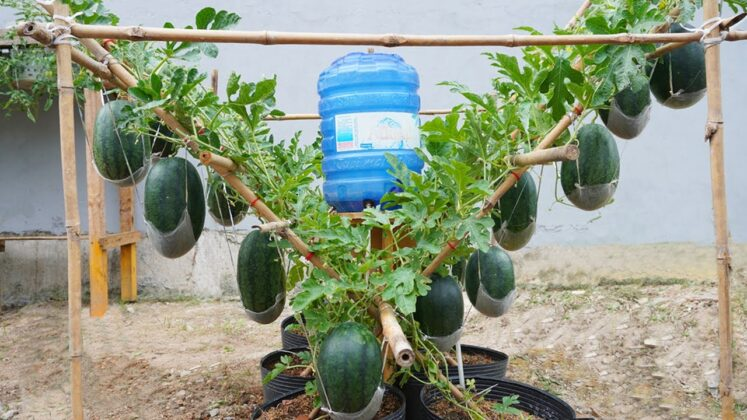
Growing watermelon, a quintessential summer fruit, in the comfort of your own home can be both rewarding and fun. While watermelons are traditionally grown spread out on the ground in large gardens, we understand that not everyone has the luxury of ample space. This article looks at two innovative methods for growing watermelons at home: the hanging hammock method, ideal for beginners, and the earthbag method.
- The hanging hammock method (suitable for beginners)
For those with limited floor space or simply want to try an inventive way to grow watermelons, the hanging hammock method offers a great solution.
water1
Materials:
Young watermelon plant
Solid lattice or vertical structure
Garden netting or fabric to create a hammock
Strong twine or garden ties
Potting soil
Container with drainage holes
Not:
Preparation: Start by selecting a container large enough to accommodate the growth of a watermelon plant. Fill it with high-quality potting soil and plant your watermelon plant.
Setting up the trellis: Position your trellis or vertical structure near your planted pot.
Vine Training: As the watermelon plant grows, gently guide its vines toward the trellis, securing them with garden ties.
Creating the Hammock: Once the watermelon fruit begins to form, support it with a hammock made from netting or garden fabric. Secure the hammock to the trellis, making sure it is strong enough to support the fruit’s growth.
Harvest: When the watermelon reaches its full size and shows signs of ripeness (like a creamy yellow spot where it rests), gently remove it from the hammock and enjoy!
- The earthbag method
An alternative method that gives your watermelon a more traditional in-ground feel without taking up garden space.
water2x
Materials:
Young watermelon plant
Large bags of potting soil (at least 40 to 50 liters in volume)
Garden knife or scissors
Not:
Preparation: Lay the bag of soil flat in a sunny location. Make sure the bag is sturdy and free of punctures or tears.
Cut the bag: Using a garden knife or scissors, cut a rectangular opening on one side of the bag, leaving about a 6-inch border all the way around.
Planting: Dig a hole in the exposed soil and plant your watermelon seedling.
Watering and maintenance: Make sure the soil remains moist but not waterlogged. You may need to drill a few small drainage holes in the bottom of the bag if water retention becomes a problem.
Harvesting: As with the hammock method, look for signs of ripeness, such as a yellowish spot on the bottom, then harvest.
Note: Watermelon varieties vary in size and growing habits. Make sure you choose the variety best suited to your chosen method.
Conclusion
Growing watermelons at home can be a delicious experience, regardless of any space constraints you may face. Using the hanging hammock or earthbag method, you can enjoy the pleasure of harvesting fresh, juicy watermelons right from your balcony or small yard. Happy gardening!