
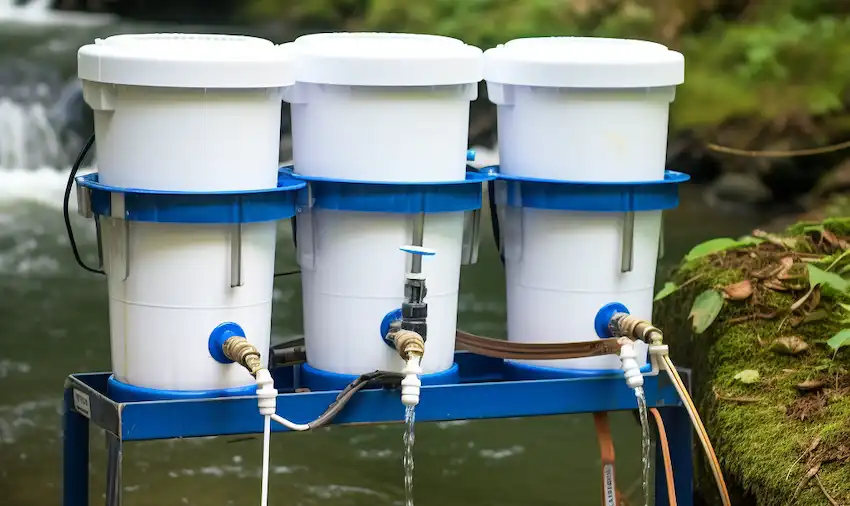
on How to Make a 3 Bucket Biological Water Filter
Access to clean water is essential to health and well-being, but it remains a challenge in many parts of the world. Innovative solutions like the 3-bucket biological water filter offer an affordable and effective way to purify water. This guide will walk you through the steps of creating this simple yet effective water filtration system.
The necessary materials
white food grade buckets
Three clean, food-grade buckets
A drill or sharp tool for making holes
Small gravel
Fine sand
Activated carbon
A tap or faucet (optional)
Step by step guide
Preparing the Buckets : Drill evenly spaced holes in the bottom of the top two buckets. These holes allow water to pass through the filtration materials.
Layer 1 – Gravel : Fill the top bucket about one-third full with gravel. This coarse layer traps larger particles and sediment, preventing them from clogging the finer layers below.
Layer 2 – Sand : In the middle bucket, add a layer of fine sand. This should be roughly the same thickness as the gravel layer. The sand acts as a finer filter, trapping smaller particles and some microbial contaminants.
Layer 3 – Activated Carbon : The bottom bucket contains activated carbon. It plays a crucial role in removing impurities and improving the taste and odor of the water. If you’re adding a faucet, attach it to this bucket.
Assembly : Stack the buckets with the gravel layer on top, followed by the sand, and finally the charcoal bucket on the bottom.
Using the filter : Pour water into the top bucket and let it seep through the layers. The water collected in the bottom bucket will be significantly cleaner.
3 Bucket Bio Water Filter
Care instructions
Replace the sand and charcoal regularly and rinse the gravel.
Ensure the buckets are clean and free of contaminants before assembling the filter.
The 3-bucket biological water filter is a testament to the simplicity and ingenuity of water purification. While this significantly improves water quality, keep in mind that it may not remove all pathogens or chemicals. For complete safety, consider additional purification methods such as boiling.