
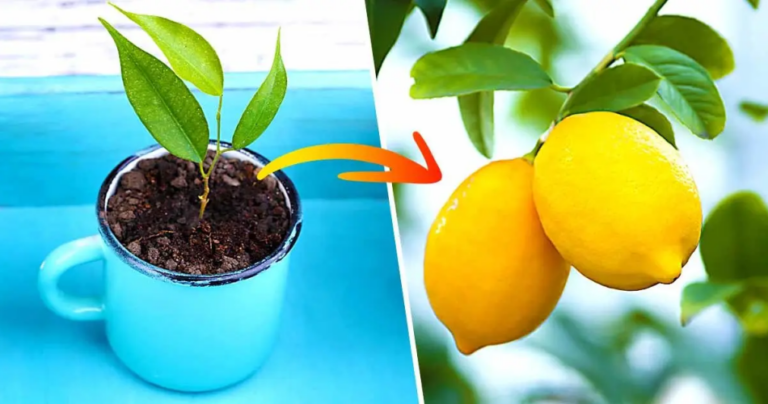
At home, our houseplants aren’t just decorative; they’re also depolluting, purifying the air we breathe. According to the Chinese philosophy of Feng Shui, some plants even bring positive energy and drive away all negative vibes. Moreover, our plants are highly symbolic and represent us: we carefully select the shape, color, texture, and scent they give off. In some cases, some plants are even grown to end up on our plates.
Take lemon, for example. Rich in vitamins and antioxidants, this exceptional citrus fruit boasts countless health benefits. But that’s not all. With its disinfectant, whitening, and deodorizing properties, it’s a perfect household cleaner.
Want to perfume your home with a delicate, tangy freshness? In this article, we’ll show you how to germinate lemon seeds at home. With this tip, your living spaces will be filled with a wonderfully fruity scent.
Also read: Practical guide to planting lemon seeds in pots
lemon seeds
How to get lemon seeds?
For this first task, you have two options: you can recycle the seeds of a lemon that has already been consumed, giving them a second life, or you can buy them directly from a specialist store.
Regardless of how you obtain your seeds, you’ll need a pot to grow them in and soil to fill your chosen container. If you choose the former, it’s more convenient to rinse the seeds to remove the outer skin. It’s best to use bottled water over tap water, especially if it’s too hard.
cup of vegetable lemon
How to germinate lemon seeds?
Once your seeds are ready to be planted, you have two planting methods to choose from:
The first is to place them directly into the pot with the soil and place them about 3 cm deep from the surface. This method is simpler because you won’t need to transplant them once the seed has already germinated.
The second method involves placing a thin layer of moistened cotton in a small cup over the seeds and another layer on top. This speeds up the germination process. If you choose this method, you can have more controlled humidity and temperature, ideally between 20 and 25°C. Caution: the cotton must always remain moist. If it is dry, nothing will grow, so remember to moisten it regularly with a spray bottle. Normally, the seeds take 5 to 8 days to germinate. Remove the second layer of cotton and place the seeds in the pot with the soil.
lemon
As we’ve already mentioned, thanks to its characteristics, lemon is excellent for your health, but it’s also ideal for cleaning and perfuming your home. However, you’ll have to be patient while the seeds germinate, depending on the method used. Their growth will vary depending on the living conditions you provide them, the humidity of the soil, and the temperature where you plant them.
How do I care for my lemon tree?
Lemons, like all citrus fruits, require special but very simple care. If you’d like to keep them at home, we’ll explain how to properly care for them to keep them in optimal condition:
Fertilization
Fertilizer is another important part of caring for your lemon tree. If you’re moving it to a larger pot, you can add compost or worm castings to the bottom before transplanting. You can do this once a year or every six months.
Floor
The soil in which you grow your lemon tree must be permeable and aerated. Lemon trees need a lot of water, but they need soil that can absorb it well.
Temperature
The lemon tree is very sensitive to cold. Therefore, it should be dried at room temperature. Lemons thrive in Mediterranean climates, where temperatures typically range between 15 and 25 degrees.
humidity
Humidity is another important factor to consider: you should regularly check your lemon tree, as it needs a lot of water. If you have good soil with aeration and flow, you will be able to water your plant more easily. It is important to water slowly to allow it to absorb the water, without flooding or forming puddles, this way the soil will always remain moist.
Also read: I no longer buy garlic from the store. My gardener explained to me how to grow it in large quantities.
NB : In a pot, lemon trees dry out much faster than in garden soil. Proper watering is therefore essential. How can you tell if it’s not watering properly? You’ll notice if the lemon starts to split.
Growing a lemon tree in a pot at home is a great way to enjoy citrus fruits. Remember to prune it as it grows to maintain its compact shape. During the growing season, it’s a good idea to add a special citrus fertilizer every two weeks to promote better fruiting. Finally, be very careful of pests like aphids or mealybugs that attack the vase. The lemon tree is likely to have a visible whitish mass on its foliage, and the lemons can rot prematurely.
Read also: The brilliant trick for growing an olive tree from a pit: nothing could be simpler