
on
Moist Soil and Full Sun: How to Grow Daisies
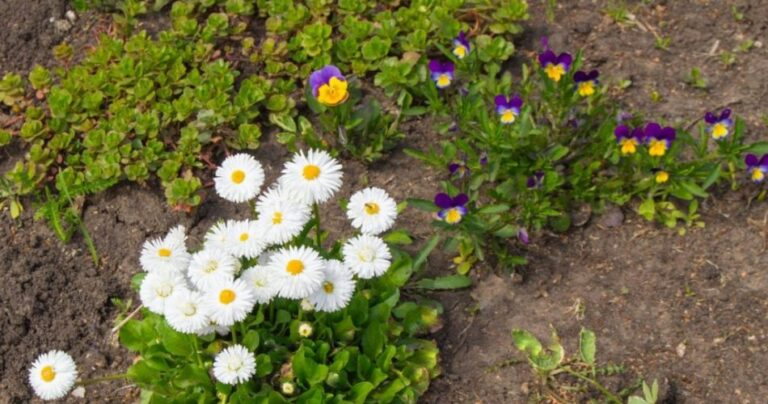
In all likelihood, the daisy is the flower that appears most often in children’s drawings, the most representative of the category, and for this reason also the best known. Its stem is erect, slender and sinuous in appearance, the leaves rather sparse, while the “flower head” is yellow and has many white petals grouped together.
Variety
It is a perennial plant , and can belong to two different genera of the same Asteraceae family : the genus Leucanthemum which includes Leucanthemum vulgare , the classic daisy, and Leucanthemum atratum whose flowers do not exceed 30 cm in height, and the genus Bellis , which distinguishes the perennial Bellis , that is, the so-called “pratolina” or meadow daisy , with smaller rosette-shaped leaves and a more creeping habit.
Culture and care
Exposure
Undoubtedly, full sun exposure favors the growth of this spring flower. In any case, the daisy can be planted in partial shade, without this exposure hindering the plant’s development.
Soil and manure
Any type of soil is suitable for growing daisies, although in some cases it may be more appropriate to use slightly chalky soil. A good rule of thumb is to ensure that the soil is always kept moist and well-drained.
As for fertilization , an organic product is recommended, or possibly, in early spring, a slow-release granular fertilizer with a high potassium content.
watering
The daisy needs to be watered fairly frequently: three or four times a week in spring, then daily in summer, especially on the hottest days. During the dormant period, it’s best not to overwater: once every two weeks is more than enough.
Before watering the daisy, check if the plant really needs water: if the soil is dry, you can proceed, otherwise if it is still damp to the touch, wait to wet the plant.
Size
The daisy does not need to be pruned, so just remove the lost parts.
Diseases and pests
The daisy is a very hardy plant, but there are some differences between the genuses: the genus Bellis , as a rule, is not afraid of diseases and pests, while the genus Leucanthemum may fear aphids or snails.