
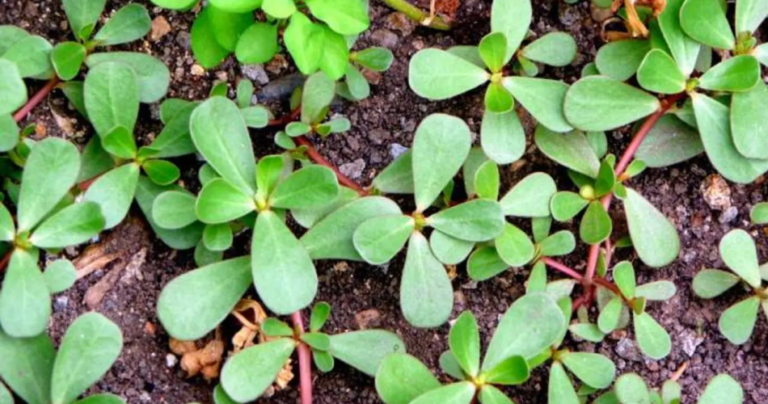
When it comes to garden maintenance, one of the recommendations, both for lawns and plants , is to eradicate formations that can be considered negative; However, now we are going to tell you what is the “bad” weed that you should not cut from your garden, we will give you the reasons.
One of the reasons you need to pull out grass is because it absorbs nutrients from the substrate that the plant needs, so it’s recommended to trim any areas that might be affected. However, not all of them are as bad as they seem.
Some consider them “weeds,” while others believe that any growth that forms between or above pots should be removed so as not to affect the growth of your plants. But there is one plant you should leave out, and that’s purslane.
Believe it or not, this vegetable also grows spontaneously thanks to the movement of seeds, rain, and the constant movement of spores carried by the wind. The best thing is that if you know how to differentiate it, you could have a much more complete garden.
How can you tell it apart? It has the ability to rise from the ground and has large leaves that resemble those of a succulent. Its sap is transparent and its stem is reddish, so it can be distinguished from toxic or negative ones, which have a whitish sap.
What can you do with this herb? You can use them in salads, stews, and to add a whole new flavor to red meats. Plus, they’re an excellent source of energy.
What are the benefits of purslane, the “bad” weed that should not be cut?
“Purslane is a plant that provides a good amount of vitamins and is classified as the highest source of omega-3 fatty acids in the entire plant kingdom. In Mexico, 5,474 tons were produced in 2019,” the Mexican government said in its latest report.
Among its benefits is that it is rich in omega-3, it contains a good amount of vitamins A, B and C. In addition to providing calcium, iron, potassium and magnesium; It is also effective against constipation and inflammation of the urinary tract.
It is a herbaceous plant that grows from 15 to 50 centimeters in length, its consistency is fleshy, soft and juicy; it has a sour taste. “It grows in humid places like river banks or roadsides; it spreads easily and covers a lot of space,” they detail.