
on Tomato fungal disease, how to recognize and prevent it at a glance
Let’s take a look at how to immediately recognize tomato fungal disease. Here’s how to prevent it and keep it from spreading: these are the signs.
We are at the perfect time of year to grow our beloved tomatoes . Tomatoes are practically the basis of Mediterranean cuisine. Between salads, caprese, sauces, etc., they represent the most versatile and delicious food that nature can offer us as a gift. There are dozens and dozens of different tomato varieties , and we can choose to grow the one we prefer the most. Growing tomatoes is not easy at all: they are delicate fruits and very vulnerable to external aggressions .
If we don’t take the right precautions during the growing phase, we shouldn’t be surprised if the results aren’t satisfactory. In addition to thinking about feeding and watering the plant, we must be aware of diseases that certain fungi could bring to our garden. These aren’t harmful to humans, but they are harmful to our tomatoes and their integrity. Here’s how to prevent and recognize a fungal disease.
Fungal disease of tomato: late blight
Some fungal diseases can completely wreak havoc throughout our garden. Some diseases develop very easily and are capable of destroying entire tomato plantations. Among these is late blight. Tomato late blight is one of the most common tomato diseases, but also one of the most dangerous. This disease occurs directly in seedlings, therefore, prevention and protection must be implemented from the very beginning. The cause is the fungus Phytophtora infestans . But how can we understand when this fungus is invading our plantation?
Mildew in tomatoes
To notice the symptoms of tomato blight, regular crop inspections are necessary, and preventive protection is best. Prevention of the onset and spread of the disease is achieved by taking a comprehensive set of preventive measures and intervening very often. The pseudofungus Phytophthora infestans damages all parts of the plants . Here’s how to recognize it.
When our tomatoes are in danger
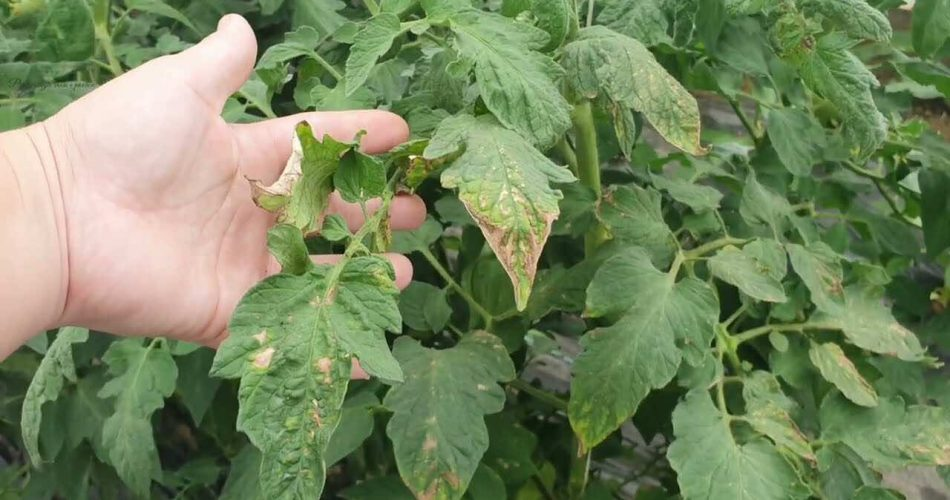
The extremely humid climate is ideal for the initiation and subsequent proliferation and spread of the disease. The first symptoms of the disease appear when plants are grown in a temperature range of 18 to 21 degrees and a high relative humidity of 60 to 90%. The first symptoms of the disease are related to the appearance of light green or whitish spots on the leaves of the plants, initially on the tips of the leaves.
Mildew in tomatoes
After some time and unfavorable climatic conditions, the spots spread to the entire leaf mass . It appears on the stem in the form of elliptical spots that change shade from the initial light state to a darker color. They appear in the form of rings , which causes a blockage of the flow of nutrients and possible desiccation of the plants. The fruits are affected by dark spots that lead to rotting and decay of the fruit and plant. It can be concluded that late blight is dangerous at all growing seasons . It is necessary to protect the plants in advance, especially before the long rainy period. Strong evaporation of moisture from the soil is more suitable for the development of this disease.