

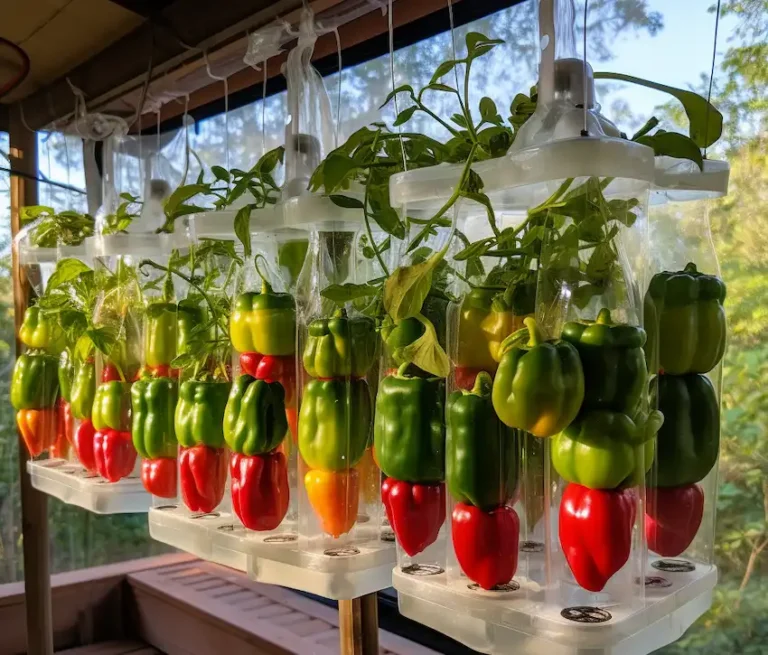
Part 1: Benefits of Growing Peppers Upside Down
growing peppers upside down
Growing peppers upside down isn’t just a unique gardening trend; it’s a practical solution for environments with limited space and has many benefits:
Maximized Space Use : Tailor-made for city dwellers with small garden spaces, this vertical growing method is a game-changer, especially for balconies and compact backyards.
Improved plant health through better air circulation : The upside-down position ensures that peppers receive optimal air circulation. This is essential for preventing moisture-related diseases that can develop in less ventilated ground-level gardens.
Protection from soil-borne hazards : By being airborne, peppers are less susceptible to soil-borne diseases and pests like slugs and snails, which commonly plague crops grown in the ground.
Simplified Plant Care : This approach eliminates the need for traditional plant support systems like cages or stakes, making it a simpler and less labor-intensive gardening method.
Minimal tillage required : The nature of this method means less interaction with the soil, resulting in less routine soil maintenance tasks such as weeding.
Targeted water and nutrient delivery : By watering from above, the roots receive a more direct supply of water and nutrients. This is particularly beneficial for the unique watering needs of peppers.
Part 2: Step-by-Step Guide to Setting Up Your Upside-Down Pepper Garden
plastic bottles in the garden
Creating your own upside-down pepper garden is both rewarding and simple. Here’s how to get started:
Materials needed :
Large reusable plastic bottles (at least 2 liters, larger preferred)
Pepper plants
Masking tape
Punch or drill
A sharp knife or scissors
Durable string or rope
Quality potting soil or compost
Assembly guide :
Bottle Preparation : Start by thoroughly cleaning the plastic bottles and removing all labels. Cut the bottom of the bottle with a sharp knife or scissors to create a clean edge.
Smoothing the edges and creating holes : Use masking tape to cover the sharp edges created by cutting. Then, create four equally spaced holes near the cut edge for the string.
Inserting the Seedling : Turn the bottle over so that the original top is now at the bottom. Gently place the pepper seedling inside, positioning it so that the roots extend into the bottle and the plant emerges from the neck.
Adding the growing medium : Fill the bottle with quality potting soil or compost, ensuring that the roots are well covered and the soil is just below the neck of the bottle.
Securing the installation : Thread the string or rope through the pre-drilled holes, ensuring a stable and balanced support for hanging.
Optimal placement : Hang your new pepper pots in a sunny spot, as peppers thrive in well-lit environments.
Regular care and maintenance : Regularly monitor soil moisture, ensuring it remains moist but not waterlogged. Peppers will require constant care for optimal growth and fruiting.
a basket of peppers
By following these instructions, you can effectively create a unique and productive upside-down pepper garden, perfect for adding a touch of greenery to urban spaces. This method not only saves space but also adds an intriguing element to your gardening, promising a satisfying and fruitful endeavor.