
Why is it good to water plants from below?
Given the number of amateur gardeners rushing to nurseries, horticulturists, florists and especially the garden sections of large DIY stores, it is clear that gardening is on the rise.
Gardening enthusiasts are becoming increasingly popular. It’s true that it’s one of the most relaxing hobbies, suitable for both farmers who have a large vegetable garden and citizens who can create a small green space at home or on their balcony.
Gardeners, whether they’re novices or experts, know that if there’s one tricky subject, it’s watering plants. After good sun exposure and quality soil, properly measuring your water needs is the key to a healthy green plant.
Read also: Water tomatoes with this: the plants will grow strong and fertile
We’re going to look at a tip that you absolutely must know if you want to have beautiful and healthy plants.
Classic top irrigation
top watering
Traditionally, potted plants are watered from above. We then take our watering can and fill it with water, which is not too hard, and then water “from above,” hence the name, by pouring the water onto the soil. Some people sometimes prefer to water the foliage. This is possible, but be careful, there are some species of green plants that don’t particularly like this technique. It tends to leave streaks on the leaves or encourage mold when they have a protruding tuber.
By pouring water from above, gravity will slowly seep in and nourish the roots. In nature, the substrate is never completely saturated; water either penetrates deep into the soil or runs off. The situation is very different in gardening. The concern is that plants could quickly drown due to excess water stagnating at the bottom of the pots. A guaranteed detrimental effect. Due to excessive humidity and excess water, the roots will suffocate (anoxia) and therefore rot. Not to mention the water wastage caused.
This is the classic and conventional method. What if you switched to bottom irrigation?
Bottom watering
bottom watering
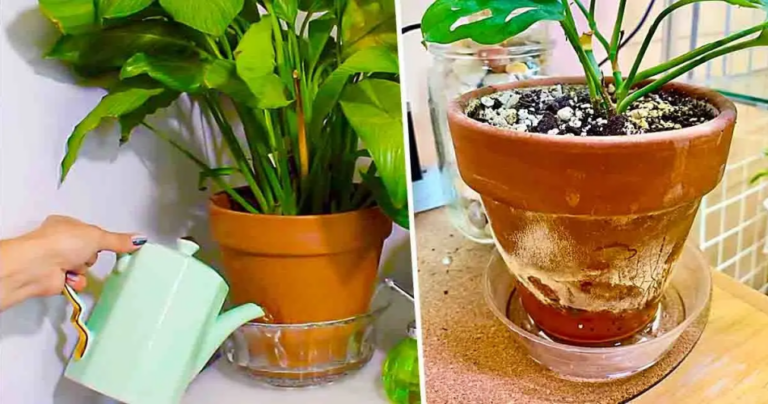
Bottom watering is also called saucer watering, named after the terracotta or plastic container placed under the vase, tray, or planter. How does this method ensure proper watering? Rather than pouring water onto the soil or foliage as with overhead watering, here you pour the water directly into the saucer.
The benefits of watering plants from below
- Avoid overwatering which is even worse for a plant than underwatering.
- Measure the water supply correctly.
- Prevent the soil from remaining soggy and attracting all types of insects and aphids.
- Save water.
- Avoid leaching nutrients from the substrate which, when watering from above, will flow to the bottom of the pot.
- Finally, this is the best watering method when you haven’t watered for a while and the substrate is particularly dry. If you water from above, the water will flow directly to the bottom of the pot without even the plant’s roots being able to benefit from it.
Step by step method:
- Fill the watering can with tap water (or consider collecting rainwater).
- Pour the water directly into the saucer. This will literally cause the plant to drink the water, which will rise by capillary action. It is always surprising to observe the water absorption by the plant during watering.
- After fifteen minutes, check whether the water has been completely absorbed. If there is nothing left, it is likely that the amount of water poured is not enough.
- Repeat the operation and add a little water to the saucer.
Read also: How often should you water houseplants to keep them healthy?
- Let this time pass for half an hour. If when you come back you notice that there is still a little water, it is this excess that the plant does not need. Above all, do not leave it in the saucer; it will rot the roots and attract insects. Empty the saucer.
By applying this technique your plants will be more beautiful than ever.
Read also: To have an abundant harvest, a gardener friend gave me this tip to apply at the beginning of March