
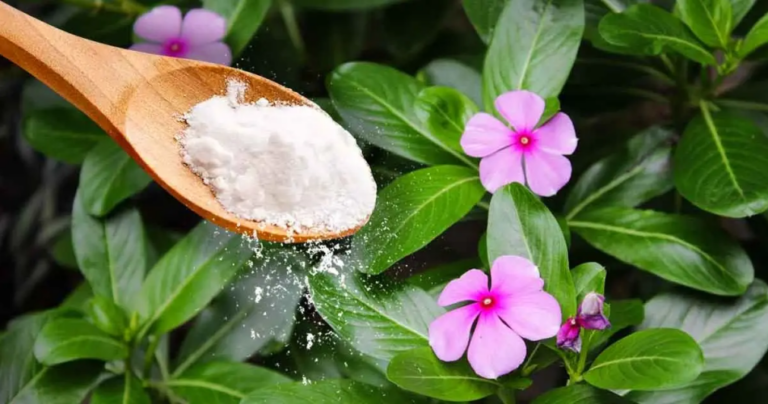
on Why should you put baking soda on plants? Dosages and uses
To care for your plants or vegetable garden, why not opt for a DIY approach? Baking soda is great for treating and maintaining your seeds. Discover these uses for your garden.
Whether it’s for your vegetable garden or your houseplants, this white powder packs a punch. You’ll be amazed at its properties for your plants!
What are the uses of baking soda for plants?
Baking soda is a dreaded DIY product for your garden. And for good reason, it can have many uses and act effectively for healthy plants. This white powder is a curative and preventative remedy, provided you know how to use it wisely to maintain your plants . If its use is recommended for gardening, it is because unlike plant protection products, this kitchen-friendly bottle is healthy for your young plants but also for the environment.
Also read: Mosquito-repellent plants: natural solutions to keep the little invaders away
sodium bicarbonate
This powdered product used for cooking will quickly become a must-have if you know how to use it for your plants. Baking soda should be part of every budding gardener’s arsenal because it cleans plants thoroughly thanks to its powerful disinfectant action. It is therefore an excellent treatment for plants affected by a fungal infection . This system D fungicide fights head-on mold, microorganisms that proliferate quickly. To overcome them, it is important to eliminate them in time.
plants-1
How to use baking soda to kill spores on your plants?
To benefit from this effective mold remedy, it is essential to use it in the right way and in the right dosage .
In a bowl, mix one liter of water with one teaspoon of this disinfectant powder and 3 teaspoons of olive oil or vegetable oil. The oil would allow the dust to stick to the leaves. This preparation must be liquid and homogeneous. Pour everything into a bottle equipped with a sprayer. Subsequently, the product must be sprayed directly onto the plant affected by the fungus, starting from the top to the bottom of the stem. This action will allow your plant to be stronger and eliminate the fungi that have accumulated on it. To treat crops, it is advisable to adopt this treatment when temperatures are low and the atmosphere very humid . To combat this contamination, spray your plants once a week with this solution. This preparation, which fights the spread of these spores, must be prepared at the time of use since the sodium bicarbonate can lose its effectiveness if it remains in the bottle for a long time. This solution also has a preventive effect on the appearance of these pathogenic microorganisms.
plantations
Baking soda fights insects
Did you know that this white powder has a repellent effect against insects? And for good reason, they hate the smell. If you want to take advantage of its properties, you will need to sprinkle it in a colander and let the bicarbonate work. You will be able to say goodbye to cockroaches , ants or even snails in your garden.
Baking soda makes cut flowers in a vase last longer
If you’ve picked flowers to put in a vase to decorate your home, baking soda could be a great help. And for good reason: it makes your flowering plants more resilient . They’ll disappear much later than running water!
Baking soda is powerful at killing weeds
This product, ideal for caring for diseased plants, is also formidable in combating the presence of weeds. A preventative and ecological measure that you would be wrong to do without for your garden or vegetable patch! To do this, sprinkle baking soda between the garden and patio slabs to eliminate and slow the proliferation of weeds.
baking soda garden
Baking soda makes your tomatoes tastier
If you’re growing tomatoes, baking soda is an environmentally friendly product that has several benefits. It gives these fruits a sweeter flavor. The reason: This white powder reduces the acidity level of the soil . Sprinkle baking soda on the soil around the plant and repeat the process halfway through the growth of this juicy fruit.
Also read: Digging your nails into a lemon: My gardener’s favorite trick for preserving plants
Water the plants
Baking soda is effective for refreshing compost
This alternative to chemicals is also effective in eliminating bad odors from compost , a homemade organic fertilizer. Pour two tablespoons of this powder into the compost and you’re done!
As you can see, this essential household product protects and cares for your plants. It replaces many other products and saves you a lot of money.
Also read: It’s the perfect time to sow these 10 plants that will perfume the garden in winter