
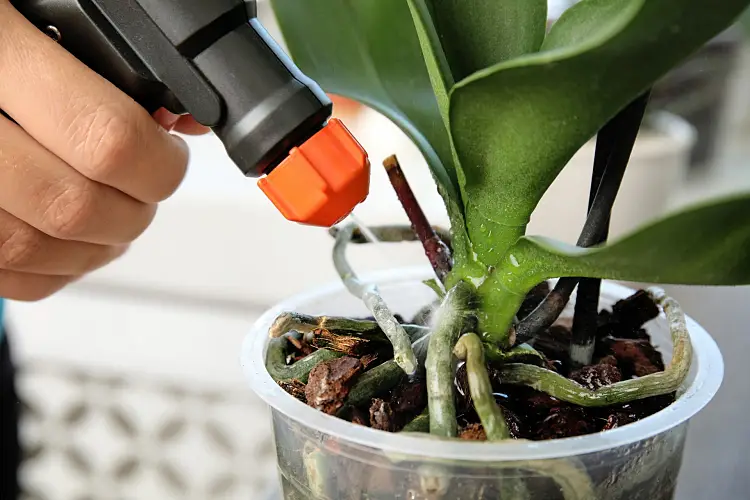
Orchids are mostly plants that don’t grow in soil. This raises the question of the effectiveness of fertilizing them with all sorts of household products, such as coffee, milk, or cut bananas. Experts say that a good natural fertilizer should be water-based, free of solids, and well-fermented for immediate nutrient absorption. Be aware that it’s a myth to put coffee or eggshells in your orchid pot. It won’t be able to absorb these nutrients because it’s a very special flower. The natural version is much more effective and is a yeast-based fertilizer for orchids. Yeast is the most effective natural fertilizer, containing many B vitamins. The perfect balance of these substances promotes plant root growth, making them stronger and easier to transplant.
What is a good natural fertilizer for orchids?
Natural fertilizer orchid yeast indoor plants dosage recipe
Natural fertilization is a little more complicated than simply adding an organic substance to the plant’s soil. It requires a holistic ecosystem with healthy communities of microorganisms, adequate temperature, humidity, and time to break down large nutrient molecules in organic matter into smaller chemical molecules before they can be absorbed by the plant’s roots. The principle of organic fertilization is to feed the soil rather than the plants. It can take microbes in the soil anywhere from 3 weeks to a few months to metabolize large molecules of organic matter, such as proteins, into smaller molecules. However, since orchids do not grow in soil, natural fertilization for epiphytic orchids should not focus on feeding the soil for their release. Rather, immediate nutrient release is required. Additionally, what makes natural fertilization more difficult for orchid growers is the approach that most home-grown orchids are not native to their native habitat. This includes:
growing orchids in pots
Growing orchids at home
Orchids growing in a medium of moss and bark
Rinse or soak orchids periodically to prevent salt buildup on the roots
change the environment every 2 years to prevent rot and root rot
Fertilizer for yeast orchids: the recipe
What liquid fertilizer for orchid yeast plant recipe to use homemade in pot
A good natural fertilizer suitable for growing orchids indoors should be water-based to facilitate rapid nutrient release. Follow these guidelines to prepare the yeast dressing recipe:
1 kilogram of yeast diluted in 5 liters of water
Dilute the solution with water in a ratio of 1:10 before use.
If you have dry yeast instead of regular yeast:
Allow 10 grams for 10 liters of hot water
Add two tablespoons of sugar
Let the mixture sit for a few hours.
Typically, this solution is used for watering flower beds, vegetables, fruit trees, berry bushes and orchids.
Myths about natural orchid fertilizers
Myths what fertilizer liquid orchid yeast plant recipe to use potted house
There’s nothing wrong with fertilizing plants naturally, as natural fertilizers work well for plants. But many people find this overly simplistic. Below, I’ll discuss the problems with some myths about these commonly recommended natural fertilizers to avoid orchid care mistakes.
Coffee: Using coffee to fertilize orchids is one of the biggest myths. Coffee works well as a fertilizer for garden plants with soil. But not so much for indoor orchids. Are coffee grounds good for houseplants? This poses several problems, especially when fertilizing orchids. It can clog the foam medium, reducing airflow to the roots and increasing the risk of root rot. Additionally, coffee grounds take a long time for microbes to break down proteins and release their nitrogen for root absorption. Again, epiphytic orchids don’t grow in soil, so it’s questionable whether there are enough, if any, microbes around the roots to break down the nitrogen. Coffee grounds can also attract gnats and pests.
Eggshells: There are recommendations to cook eggshells, grind them into a powder, and then sprinkle them on orchid leaves or apply them directly to the medium. The claim is that burnt eggshells provide orchids with calcium phosphate. The problem is very similar to that of coffee grounds. Eggshell dust can clog the orchid’s medium, reducing airflow to the roots. And applying eggshell powder to the leaves won’t work because the protein molecule is too large to pass through the tiny pores in the leaves. So beware of myths.