
In the collective imagination, the olive tree is almost always an immense tree, perhaps a hundred years old, planted in large spaces so that it can give us its precious fruit, the olive, the raw material of the precious Mediterranean diet.
However, there are some varieties of olive trees that can also be planted in pots , in small spaces, and which do not produce fruit.
The olive tree is a plant that easily adapts to climate and extreme conditions , however it is not recommended to plant it in places that are too cold. Precisely for this reason, planting it in a pot that can be kept indoors is an ideal solution.
Before we begin, let’s remember that the olive tree does not need a lot of water and that the plant must have excellent drainage.
It is important to choose a correct pot, and not for aesthetic reasons. It may seem trivial, but the material contained in the pot can affect the health of our plant.
The best option are thick clay pots , as they promote good drainage and are among the most effective for insulating the plant.
As for the soil, you should choose one that is draining and light . An excellent option is to choose one composed of half universal soil and half a mixture of sand and lapilli.
The olive tree does not need frequent watering . This plant also adapts perfectly to drought conditions, so water it periodically but without exaggerating.
How to Germinate Olive Seeds
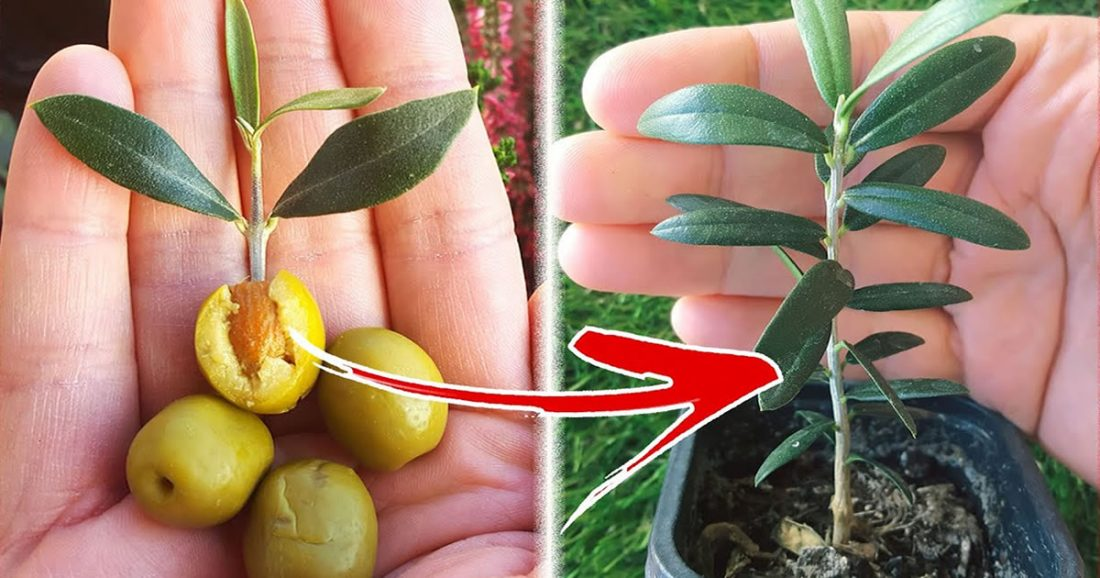
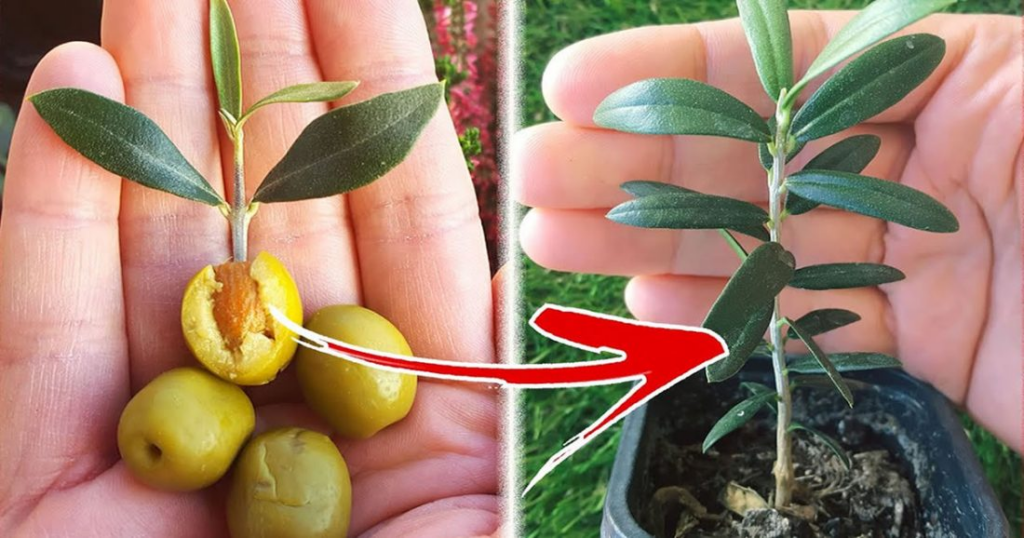
The seed of the olive is not the classic stone that remains after eating it. Even if the hazelnut can be germinated, the time frame would be too long (about 2 or 3 years).
The ideal is to break the shell of the almond and remove the internal embryo . To do this, we recommend using pliers to break the kernel lengthwise and release the fatty seed inside.
This operation requires extreme caution, to avoid damaging the seed.
Dip the seed you have taken into water. This operation will serve to activate a series of metabolic processes essential for the development of the shoot.
You can then place the seed in the potting soil and wait for the seedling to develop. It will take about 4 to 6 weeks before you see a fully formed seedling .