
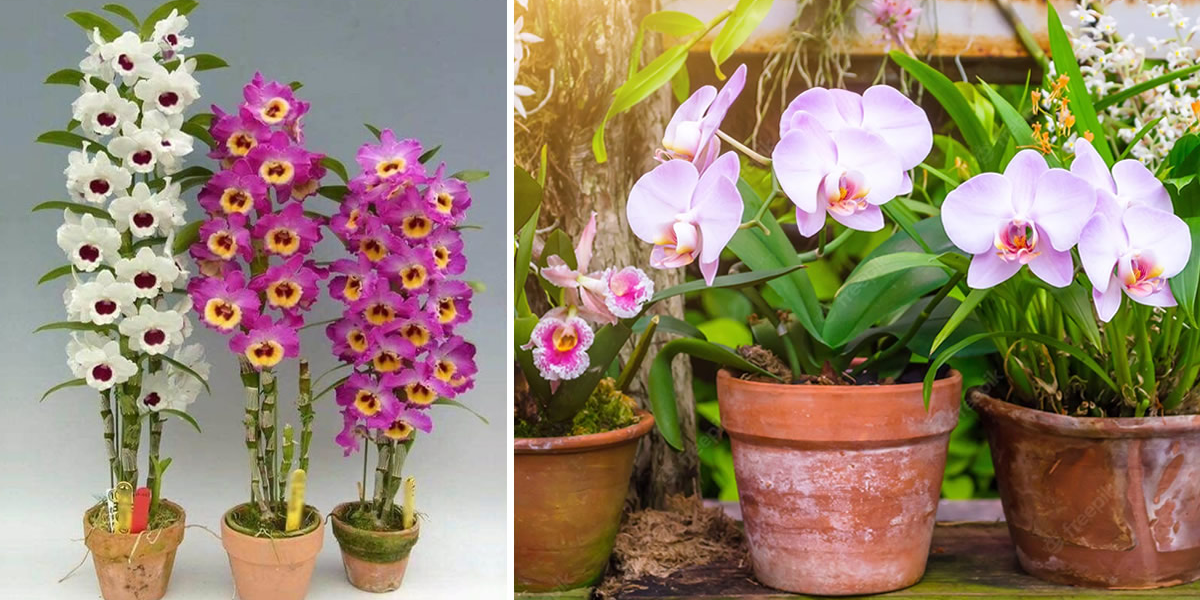
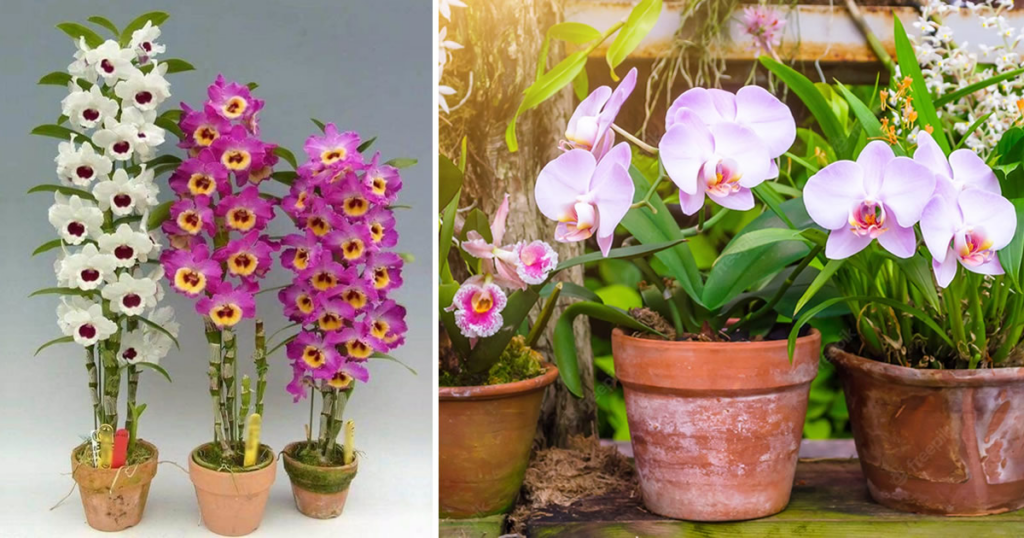
Orchids are among the most popular flowers in the world, due to their wide variety of shapes and colors, capable of giving a touch of elegance to interior spaces. Few people know that orchids can also be grown in pots : we explain how below.
To grow orchids in pots, you need to start “thinking like them.” The golden rule for healthy, flowering orchids is to faithfully reproduce their natural conditions. In nature, orchids are epiphytic plants, growing on other objects such as tree bark or stones.
The orchids that we generally prefer to have at home are hybrids of phalaenopsis (the so-called butterfly orchids) or dendrobium .
Optimal conditions for growing orchids
Orchids thrive in partial shade, but not in direct sunlight in the late afternoon. They need plenty of humidity and airflow around the roots.
These plants need dry periods, alternating with abundant watering. Orchids grow best at temperatures above 10°C but below 30°C.
The closer you get to these optimal conditions, the more likely your orchid is to grow healthily and bloom profusely.
Most orchids we buy in stores are packed in cheap plastic pots, with the roots soaked in moss. Obviously, this condition does not comply with two of the main rules of healthy growth.
The first is that there is no airflow around the roots. The second is a consequence of the first: the roots never dry out completely. Because of this, the plant cannot breathe and will almost certainly rot.
Orchid roots are organs that need to absorb water quickly and breathe. They do not extract nutrients from the soil.
Transplanting Orchids Successfully
The first thing we do when we bring an orchid home from the store is to enjoy its bloom. Never transplant an orchid with flowers.
Once flowering is finished, cut off the dead flower tip with sterile scissors and repot your orchid.
Orchids should be placed in special pots, using special soil for orchids. Orchid pots have large drainage holes so that water can flow out.
Orchid potting soil is usually made up of various coarse-textured ingredients, such as pine bark, charcoal, and even Styrofoam. To transplant your orchid, follow these steps:
Remove the orchid from the plastic bag and remove as much of the moss as possible, being careful not to damage the plant. Healthy roots should be white and firm, with a small green growing tip.
Cut off any blackened, rotten or wilted roots.
Place the plant in the pot and fill it with potting soil. The plant should be anchored to the soil, but not anchored. Over time, new roots will grow through the potting soil and cling to the pot.
Place your orchid plant near an east-facing window with a few hours of light morning sun.
To provide the plant with the necessary humidity and to collect excess water, place the plant in a large, deep saucer filled with gravel.
Tips for Caring for a Transplanted Orchid
In summer, water thoroughly once a week. Make sure the roots are soaked in water and the saucer is full.
During the growing season, feed the plant once a week with a suitable powder or liquid fertilizer.
Keep the plant warm during the winter and water it only once a month. Spray a little water from time to time to make sure the plant is hydrated. Do not fertilize.