
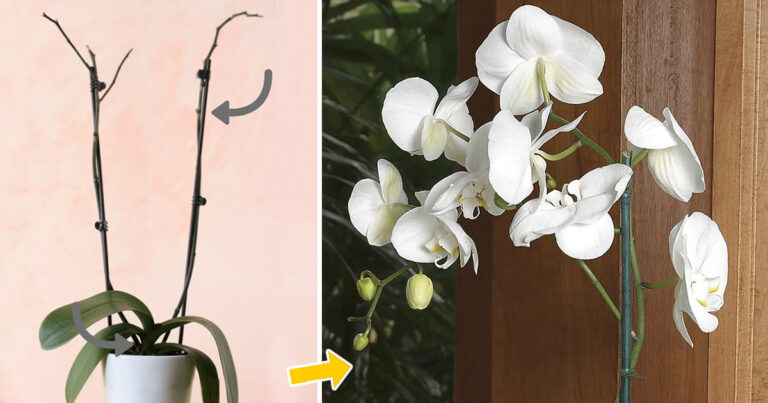
You have probably bought an orchid or received one as a gift, brought it home and watched helplessly as all its flowers gradually fade away. And the worst part is that in most cases, the flowers never come back.
Orchids are extremely delicate plants , which do not tolerate drastic changes in temperature and light, especially if they come from greenhouses (like almost all those found on the market).
Below we offer some tips to get your orchid to bloom again and produce flowers forever.
- Try moving it
As we have already mentioned, orchids do not tolerate changes very well. When we bring our orchids home, we tend to choose the place where to place them based on aesthetic logic, but the plant must be placed in a well-reasoned place.
The orchid cannot be exposed to direct sunlight. It needs a lighted environment, but must be protected from direct sunlight.
The more natural light it receives, the more likely we are to see it bloom again.
- Do not overwater
Watering it more frequently or with more generous amounts of water will not revive your orchid. In fact, we run the risk of causing it to rot permanently.
Although orchids are tropical flowers, you should not overdo the humidity of the soil. If you put it in a naturally humid place, it does not need to be watered frequently. If, on the contrary, it is in a dry place, water more frequently but not more than once a week.
- Use a specific fertilizer for orchids
Ensuring your orchid receives the right nutrients is an essential step in promoting its growth and flowering. Our homes are not the ideal environment for orchids, and for this reason they need an extra “boost”.
One of the most recommended options by experts is liquid fertilizer, to increase absorption capacity.
More tips for making orchids bloom
Try to observe the plant to understand its real condition. This is important to understand if it needs more or less water. There are two things we can observe: the leaves and the roots.
Healthy, well-hydrated leaves have an intense color and are very resistant. If they appear discolored, they need water.
In the case of roots, a green color means that they have received the right amount of water. If they take on a grayish, almost silvery color, you should reduce the amount of water.