
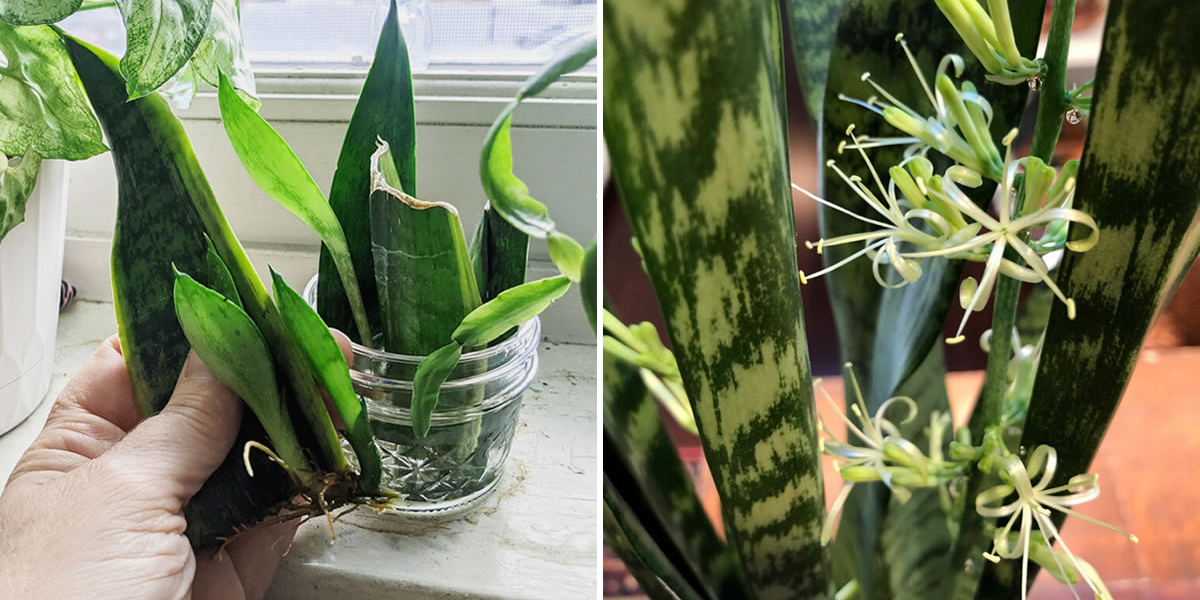
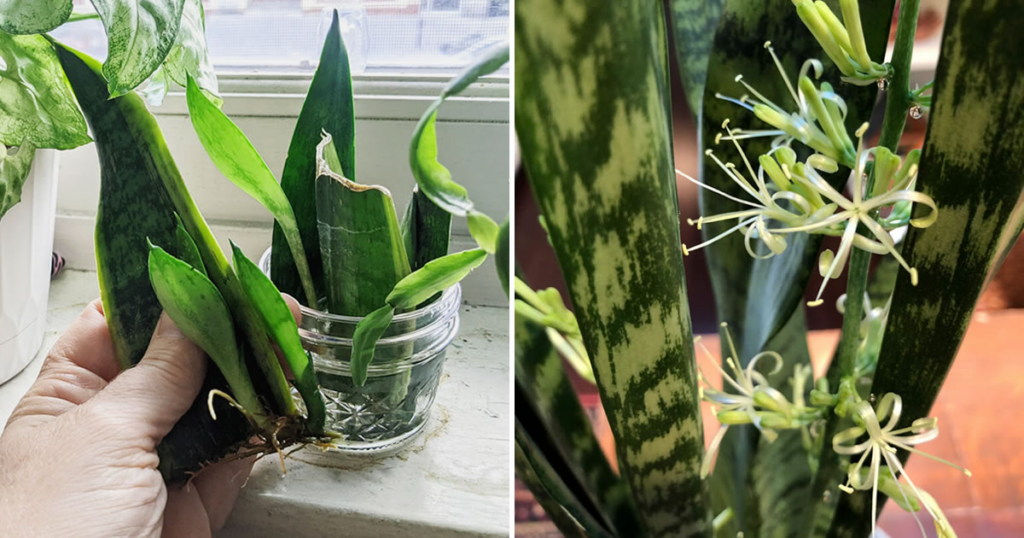
Sansevieria is one of the most popular and widespread indoor plants, as it is easy to maintain and at the same time very beautiful and elegant . Known for being almost indestructible, it still needs some care in order to produce its characteristic fragrant flowers. Native to West Africa, sansevieria is sold all over the world as a decorative plant. It prefers bright locations but not exposed to direct sunlight and needs very little water. One of the characteristics of sansevieria is that it multiplies very easily, and flowering can be stimulated just as well. Below we explain how to do it. Propagate sansevieria in water Like many other indoor plants, sansevieria can also be propagated in water and by cuttings. The coolest part of this type of propagation is that you can get many new plants from a single long leaf. To create cuttings, simply cut a fairly large leaf from the base of the plant using a sterilized knife. Cut the leaf into pieces of about 5-6 centimeters, making a horizontal cut. Then place the pieces of leaf in a jar filled with water, cut side down. The water should cover the piece of leaf by about a third. Place the jar in a bright location and add a little water from time to time. Change the water completely every 2 weeks. Once the roots have reached an inch in length, you can plant the leaf in potting soil and wait for the plant to grow. Making the sansevieria bloomTo make the sansevieria bloom, it is necessary to apply a few simple tips ranging from the right temperature to the right amount of fertilizer. Sansevieria needs a lot of light, but not direct sunlight. Although the plant can survive even in partial shade, light is essential for flowering. This plant tolerates heat well, but not cold. Try to protect the sansevieria from sudden changes in temperature and protect it from extreme cold. To have abundant and fragrant flowers it is essential to apply a special fertilizer: ask your trusted nurseryman. As for water, the sansevieria is very similar to a succulent and for this reason, you should avoid watering it too frequently. Avoid wetting its leaves and, during the winter, water only twice a month.